Residential Memory Care in 2026: A Family Guide
Choosing care for a parent living with Alzheimer’s disease, dementia, or another form of memory loss is one of the most personal decisions a family can make.
Adult children often begin their search because something has changed. A parent may be wandering, forgetting medications, leaving appliances on, becoming isolated, falling more frequently, or struggling with bathing, dressing, and meals. The family may be providing more support, yet still wondering whether their loved one is truly safe.
Residential memory care offers an alternative to managing these concerns alone. The best programs do more than supervise residents or prevent them from leaving the building. They combine secure design, predictable routines, personalized assistance, cognitive support, and meaningful daily engagement.
The goal is not to take independence away.
The goal is to create an environment where a person can continue using their abilities while receiving support in areas that have become difficult or unsafe.
What Is Residential Memory Care?
Residential memory care is a specialized form of senior living for people experiencing memory loss, confusion, impaired judgment, communication changes, or other cognitive challenges.
Some memory care programs are located within large assisted living communities. Others operate in smaller residential homes where a limited number of residents live together with caregivers nearby.
Depending on the program, services may include:
- Medication management
- Assistance with bathing and dressing
- Meal preparation and dining support
- Toileting and continence care
- Mobility assistance
- Housekeeping and laundry
- Supervision and safety monitoring
- Structured activities
- Behavioral and emotional support
- Communication with families and healthcare providers
What distinguishes residential memory care from traditional assisted living is the level of cognitive support woven into the environment, caregiver approach, and daily schedule.
A resident may be physically capable of walking, eating, or getting dressed but unable to plan the steps, remember what comes next, recognize hazards, or ask for assistance. Memory care professionals must understand both what the resident can do and where thoughtful guidance is needed.
Secure Design Should Protect Without Feeling Restrictive
Senior safety is one of the primary reasons families consider residential memory care.
A person living with dementia may become disoriented even in a familiar environment. They may try to leave because they believe they need to go to work, pick up their children, return to a former home, or complete an obligation from many years ago.
A secure environment can reduce the risk of wandering into traffic, becoming lost, encountering extreme weather, or entering unsafe areas.
However, security should not make a community feel like a locked institution.
Thoughtful memory care design may include:
- Secured exterior doors with creative designs to mask exits
- Enclosed walking areas
- Fenced gardens or backyards
- Clear pathways without confusing dead ends
- Adequate lighting
- Reduced glare and shadows
- Sensory rooms and engagement elements
- Contrasting colors around important spaces
- Easy-to-recognize bathrooms and bedrooms
- Handrails and fall-prevention features
- Uncluttered common areas
- Quiet places for residents who feel overwhelmed
The most supportive environments allow residents to move around without constantly being corrected or redirected.
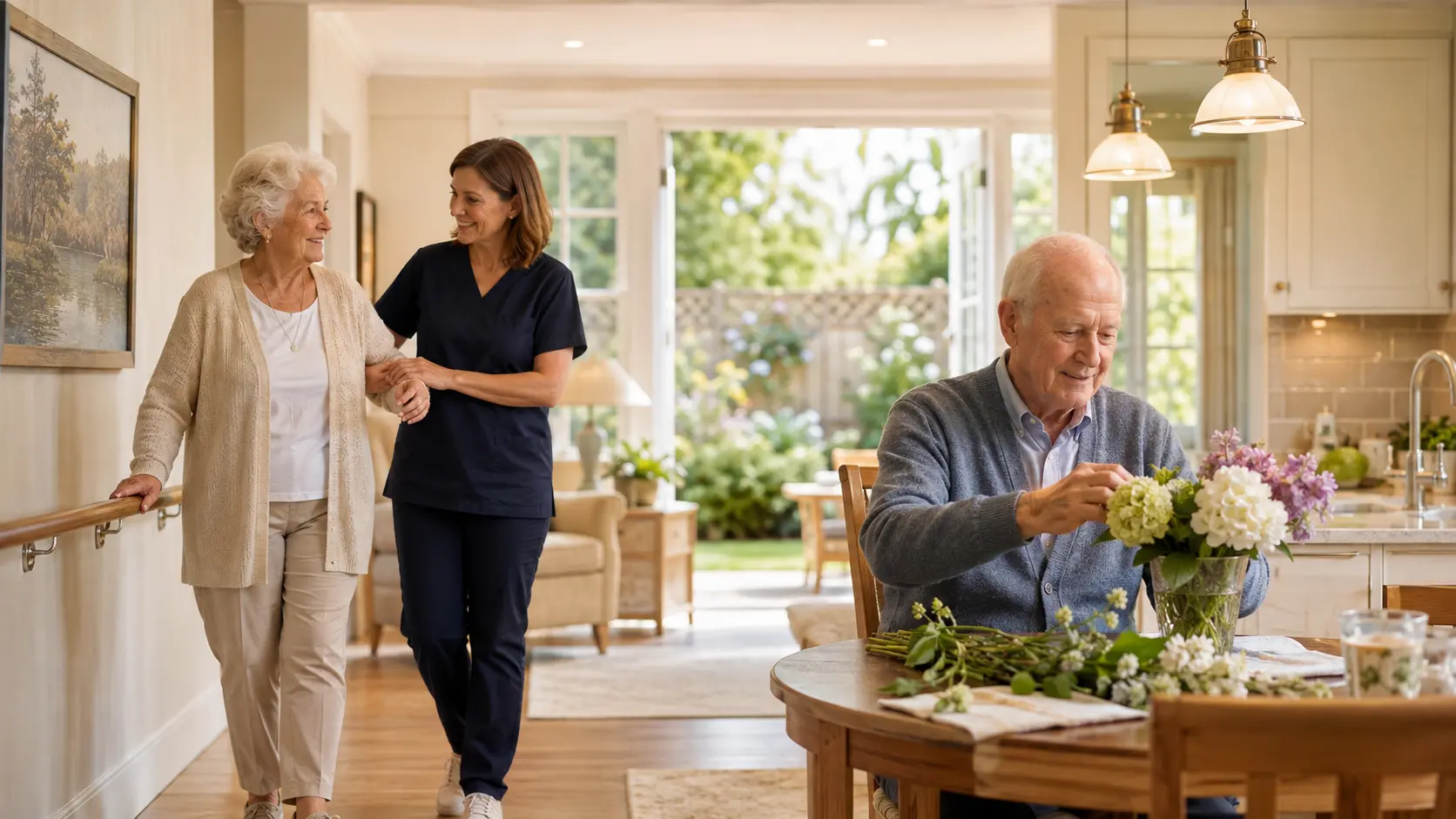
An enclosed backyard, for example, can give someone the freedom to walk, garden, sit in the sun, or enjoy fresh air without requiring a caregiver to stop them at every doorway.
This is an important principle of residential memory care: good design should quietly protect while supporting freedom of movement.
Routine-Based Support Creates Predictability
Memory loss can make the world feel uncertain.
A resident may not remember where they are, who will help them, when they will eat, or what is expected of them. Frequent surprises, changing caregivers, and inconsistent schedules can increase confusion.
Routine-based support brings structure to the day.
Routine-based approaches incorporate assistance and skill-building into ordinary daily activities rather than treating every need as a separate clinical task.
A predictable day might include:
- Waking at a familiar time
- Drinking coffee in a preferred cup
- Completing morning care in the same order
- Eating meals in a consistent location
- Walking after breakfast
- Resting during a preferred part of the afternoon
- Participating in familiar household activities
- Following a calming evening routine
To maintain consistency, a resident doesn’t need a rigid schedule, nor do they need every minute of every day planned. It means residents are surrounded by dependable patterns, familiar expectations, and caregivers who understand their preferences.
Routine can also reduce the need for repeated verbal instructions.
A resident may not understand someone saying, “It is time to prepare for dinner.” Still, they may recognize the familiar process of setting napkins on the table, hearing music in the kitchen, and smelling food being prepared.
v
The environment becomes part of the communication.
Personalized Assistance Preserves Ability
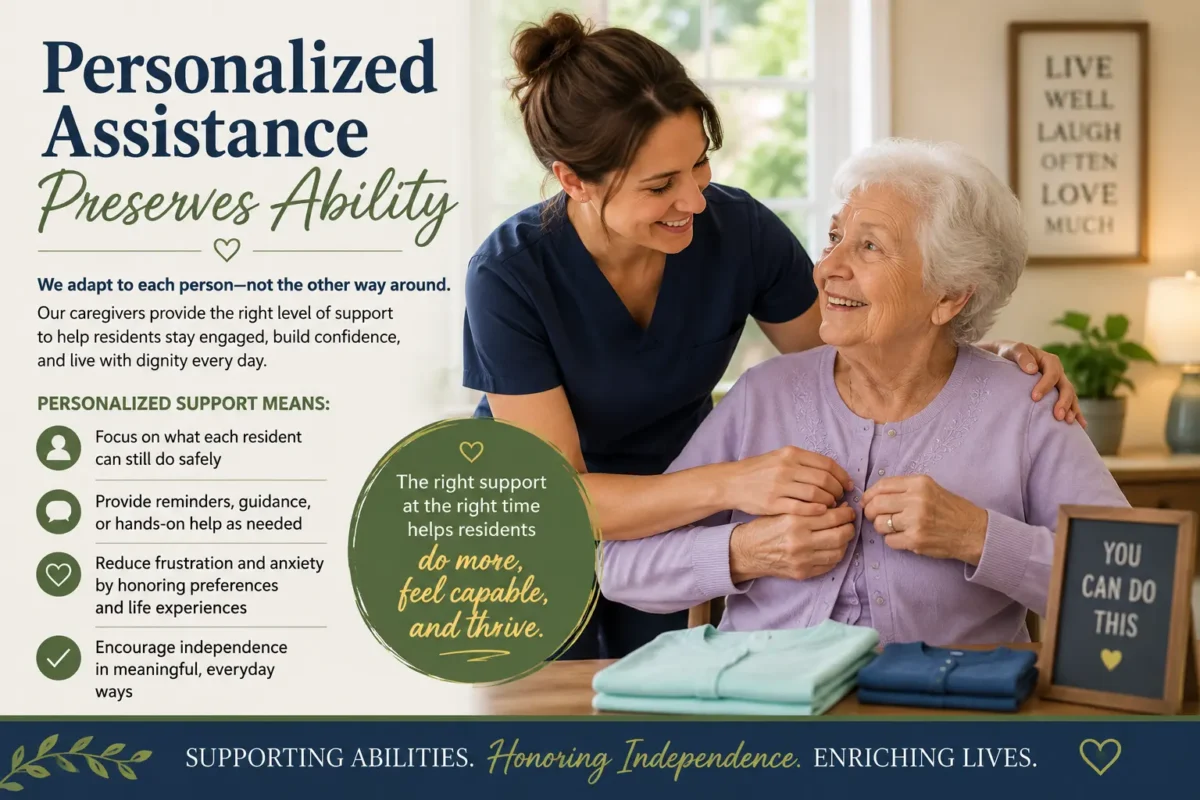
Effective memory care is not based on doing everything for residents.
When caregivers automatically take over, residents may lose opportunities to use their remaining abilities. Over time, unnecessary dependence can reduce confidence, movement, decision-making, and participation.
Personalized assistance begins by asking:
- What can this person still do safely?
- Which tasks require reminders?
- Which activities require hands-on help?
- What causes frustration or anxiety?
- What makes the resident feel capable?
- How has this person completed the task throughout life?
One resident may be able to dress after clothing is arranged in the correct order. Another may need simple choices between two shirts. Someone else may require hands-on assistance but can still participate by putting an arm through a sleeve or fastening a button.
At meals, a resident may eat independently when food is recognizable and easy to manage but struggle when the table is crowded or several utensils are presented at once.
Personalized support adapts the task instead of assuming the resident can either complete it independently or cannot participate at all.
Senior support is most effective when it provides needed assistance while preserving autonomy and dignity.
Independence Looks Different in Memory Care
Families sometimes worry that moving into memory care means giving up independent living.
However, independence should not be defined only as living alone or completing every task without help.
For a person with memory loss, independence may mean:
- Choosing between two outfits
- Walking safely in an enclosed garden
- Buttering a piece of toast
- Folding towels
- Watering plants
- Selecting music
- Helping set the table
- Calling a family member with assistance
- Deciding whether to join an activity
- Completing part of a grooming routine
These moments matter.
The right level of assistance can make more independence possible because the resident is no longer using all their energy trying to manage an unsafe or confusing environment.
Continuous support can provide safety, routine, and reassurance while still allowing older adults to participate in daily life.
Cognitive Support Should Be Part of Everyday Life
Cognitive support is not limited to puzzles, trivia, or formal memory exercises.
It includes the way caregivers communicate, prepare the environment, introduce activities, and respond when someone becomes confused.
Helpful approaches may include:
- Using short, clear sentences
- Offering one direction at a time
- Allowing extra time for a response
- Avoiding unnecessary correction
- Using visual cues
- Redirecting rather than arguing
- Connecting activities to past interests
- Creating engagement or activities around past employment or livelihood
- Reducing noise and distractions
- Acknowledging the resident’s emotions
- Providing reassurance through familiar routines
Activities must adapt to the person’s current abilities.
Music, gardening, baking, folding laundry, walking, looking through photographs, simple art projects, pet visits, and household tasks can create meaningful engagement.
The purpose is not to test memory or force participation. It is to create opportunities for movement, connection, pleasure, usefulness, and belonging.
Routine-based support guides can help caregivers identify strategies for common activities and respond to the reason behind challenging behavior.
Caregiver Consistency Matters
The physical environment is only one part of senior safety.
Caregivers must know the people living in the home.
A consistent caregiver may recognize that a resident walks toward the door when looking for a bathroom, becomes anxious before dinner, refuses showers when rushed, or eats better when seated in a quieter location.
These details are difficult to capture on a checklist.
They are learned through repeated interaction.
When touring memory care programs, families should ask:
- How many residents is each caregiver responsible for?
- Are caregivers assigned consistently?
- How long have current team members worked in the program?
- Who is awake and available overnight?
- How are changes in behavior or health communicated?
- What dementia-specific education do caregivers receive?
- How are personal routines documented and followed?
- How does the program respond when a resident refuses care?
- How are activities adapted as abilities change?
- How often will the family receive updates?
Staffing numbers alone do not tell the entire story. Proximity, consistency, responsiveness, and caregiver knowledge all influence the quality of support.
Residential Memory Care vs. Traditional Assisted Living
Traditional assisted living can be appropriate for an older adult who needs physical help but can still recognize risks, follow directions, request assistance, and navigate the community.
Residential memory care may be more appropriate when cognitive changes affect safety or daily functioning.
Warning signs can include:
- Leaving home and becoming lost
- Repeatedly forgetting medications
- Unsafe cooking
- Increasing nighttime confusion
- Inability to use emergency devices
- Frequent falls without asking for help
- Paranoia, fear, or agitation
- Neglecting hygiene
- Significant changes in eating
- Inability to recognize emergencies
- Caregiver exhaustion at home
A physician or qualified healthcare professional should evaluate sudden or significant cognitive changes because infections, medication effects, depression, dehydration, and other medical concerns can sometimes cause or worsen confusion.
Choosing the Right Memory Care Program in 2026
Do not choose a program based only on the lobby, room size, activity calendar, or marketing brochure.
Observe daily life.
Are caregivers present in resident areas? Do they speak respectfully? Are residents waiting for assistance? Does the environment feel calm? Are activities meaningful or merely listed on a schedule? Can team members describe individual residents’ preferences?
Most importantly, ask whether the program protects residents by limiting their lives or by creating safer ways for them to continue living.
The strongest residential memory care programs combine secure surroundings, familiar routines, personalized assistance, attentive caregivers, and meaningful engagement. They recognize that memory loss may change how a person communicates and completes daily tasks, but it does not erase the need for purpose, dignity, choice, and love.
At Assured Senior Living, our small residential homes are designed to help residents feel known rather than managed. Through close caregiver proximity, personalized routines, secure environments, home-cooked meals, and relationship-based support, we help residents continue participating in daily life.
Your loved one deserves more than supervision.
They deserve a true home where safety and independence work together—and where care is guided by patience, familiarity, dignity, and love.
Do not wait for a fall, wandering incident, medication mistake, or caregiver crisis to begin exploring your options. Contact Assured Senior Living today to schedule a personal tour, meet our caregivers, and discover how a smaller, relationship-based memory care setting can help your loved one live with greater safety, dignity, comfort, and purpose.
Love, it’s what we do.