

Memory Loss Care Plans in Home-Based Assisted Living
When a parent begins experiencing memory loss, families often face difficult questions.
Is it still safe for them to live alone? Are medications being taken correctly? Are meals being skipped? Is a familiar routine helping, or is each day becoming more confusing? How can the family provide support without taking away independence?
For many older adults, home-based assisted living offers a valuable middle ground between remaining alone at home and moving into a large institutional care setting. These smaller residential communities combine the comfort of a real home with personalized assistance, structured daily routines, safety monitoring, and professional memory loss care.
The most effective communities do more than provide a room and complete a list of tasks. They create an individualized care plan that reflects the resident’s history, preferences, abilities, challenges, and changing needs.
For adult children comparing senior living options, understanding how a memory loss care plan works can make it easier to identify a community where a loved one will be known, protected, and supported.
What Is a Memory Loss Care Plan?
A memory loss care plan is a personalized guide for supporting an individual who is experiencing cognitive changes.
It may be developed for someone living with mild cognitive impairment, Alzheimer’s disease, vascular dementia, Lewy body dementia, frontotemporal dementia, or memory loss associated with another health condition.
v
The care plan documents more than a diagnosis. It explains how memory loss affects the person’s daily life and identifies the specific support caregivers should provide.
A comprehensive plan may address:
- Medication assistance
- Bathing, dressing, and grooming
- Mobility and fall prevention
- Meal preferences and nutritional needs
- Toileting and continence support
- Communication methods
- Sleep patterns
- Anxiety, agitation, or wandering risks
- Social interests and meaningful activities
- Family communication preferences
- Medical appointments and clinical concerns
In quality home-based assisted living, the care plan becomes a daily working document. It helps caregivers understand not only what assistance a resident needs, but also how that assistance should be provided.
For example, two residents may both need help getting dressed. One may prefer to select clothing independently before receiving physical assistance. Another may become overwhelmed by too many choices and benefit from being offered two simple options.
The task is similar, but the correct approach is different.
That difference is the foundation of personalized memory loss care.
Why Personalization Matters in Cognitive Care
Memory loss affects every person differently.
One resident may remember events from decades ago but struggle to recall what happened earlier in the day. Another may communicate clearly in the morning but become confused or anxious later in the afternoon. Some residents remain highly independent with personal care but need support with medications, judgment, or navigation.
A standardized care plan can easily miss these individual differences.
Personalized cognitive care begins with learning the resident’s life story.
Caregivers should understand:
- What name the resident prefers to use
- Their former career and family roles
- Important relationships
- Favorite foods, music, hobbies, and routines
- Religious or cultural preferences
- Topics that bring comfort
- Situations that cause fear or frustration
- How the person historically handled stress
- What helps them feel useful and valued
This information can guide everyday interactions.
A former teacher may enjoy helping organize activity supplies. A lifelong homemaker may feel comforted folding towels or setting the table. Someone who always woke early may do better with breakfast at 7 a.m. than being encouraged to sleep late.
These details may seem small, but they can reduce confusion and create a greater sense of identity, control, and belonging.
How Home-Based Assisted Living Supports Consistent Routines
Predictability can be especially important for people living with memory loss.
When the environment, caregivers, and schedule change frequently, residents may need to process unfamiliar information repeatedly. That can contribute to anxiety, withdrawal, resistance, or frustration.
Smaller home-based settings often make it easier to maintain a familiar daily rhythm.
A resident may wake at approximately the same time, sit in the same place for breakfast, recognize the caregivers assisting them, and participate in activities within a familiar living space.
A supportive routine may include:
- A consistent morning wake-up process
- A familiar face to bring comfort and trust
- Personal care provided in the resident’s preferred order
- Meals at familiar times
- Regular hydration reminders
- Planned periods of activity and rest
- Daily movement or supervised exercise
- Outdoor time when appropriate
- Evening routines that promote relaxation
- Consistent bedtime cues
The goal is not to create a rigid schedule. It is to provide enough consistency that the day feels understandable while allowing flexibility for the resident’s mood, energy, and preferences.
This balance is one of the meaningful assisted living benefits for people experiencing cognitive change. Residents receive structure without losing the warmth and spontaneity of living in a home.
Safety Measures Without Creating an Institutional Feeling
Safety is one of the primary reasons families begin considering memory care or assisted living.
Memory loss can affect judgment, balance, navigation, medication management, and the ability to respond appropriately in an emergency. A person may forget to turn off an appliance, become disoriented outside, take the wrong medication, or attempt an activity that is no longer safe without assistance.
A strong memory loss care plan identifies these risks and creates specific strategies to reduce them.
Safety measures may include:
- Secure entrances and outdoor areas
- Medication administration or reminders
- Fall-risk assessments
- AI or other technology for fall prevention
- Clear walking paths
- Appropriate lighting
- Bathroom safety equipment
- Supervision during transfers or bathing
- Monitoring for changes in appetite or hydration
- Individual wandering-prevention strategies
- Emergency response procedures
The environment should be secure without feeling restrictive.
In a thoughtfully designed home-based community, residents can often move naturally between the kitchen, dining area, living room, bedroom, and protected outdoor spaces. Caregivers remain nearby and attentive without making the resident feel constantly watched.
This proximity can support proactive care.
Instead of waiting for a resident to become distressed or press a call button, caregivers may notice that the person is searching for the bathroom, becoming unsteady, withdrawing from a meal, or showing early signs of anxiety.
Early support can often prevent a small concern from becoming a larger crisis.
The Role of Familiar Caregivers
Consistency is not simply a customer-service preference for people living with dementia. It is an essential part of effective care.
When caregivers know a resident well, they are more likely to recognize subtle changes.
They may notice that the resident:
- Is eating less than usual
- Appears more tired
- Is walking differently
- Is having greater difficulty finding words
- Is using the bathroom more frequently
- Is becoming unusually quiet
- Is more confused than their typical baseline
- Is no longer interested in a favorite activity
These changes may be early signs of pain, infection, medication side effects, dehydration, emotional distress, or disease progression.
Frequent staff turnover can make these differences harder to identify. New caregivers may not know what is normal for the resident.
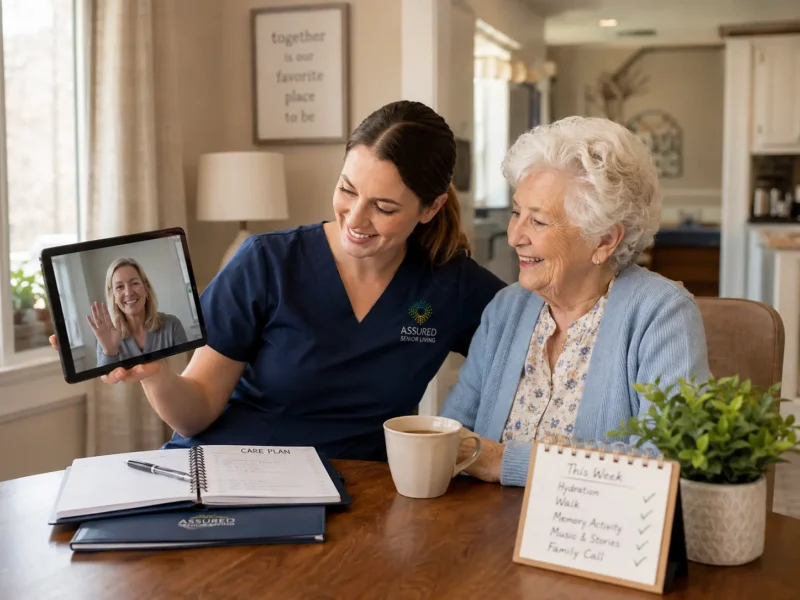
Small home-based assisted living communities may offer caregivers more opportunities to build meaningful relationships with residents. When the same people provide support consistently, trust can grow over time.
A resident who resists bathing with an unfamiliar person may cooperate with a caregiver they know. Someone who becomes anxious during the evening may respond to a familiar voice, song, snack, or reassurance.
Relationship-based care does not eliminate the challenges of dementia, but it can change how those challenges are approached.
Meaningful Activities and Dementia Support Services
Activities for people living with memory loss should offer more than entertainment.
Effective dementia support services focus on engagement, purpose, movement, social connection, and emotional well-being.
Activities may include:
- Music and singing
- Gardening
- Baking or meal preparation
- Art projects
- Pet visits
- Folding laundry
- Looking through photographs
- Simple games
- Walking
- Chair exercises
- Seasonal decorating
- Reminiscence conversations
- Household tasks
The activity should match the resident’s current abilities and interests.
A complicated craft project may cause frustration, while sorting colorful materials may be enjoyable. A competitive game may create anxiety, while tossing a balloon or working on a puzzle together may encourage participation.
Success should not be measured by whether the resident completes a product or remembers the activity later.
The value is found in the moment: smiling, moving, connecting, laughing, singing, or feeling useful.
That is an important difference between keeping someone busy and creating a purpose-filled day.
Family Communication Is Part of the Care Plan
Families should not have to wonder how their loved one is doing.
A comprehensive memory loss care plan should explain how and when the community communicates with family members.
Communication may include:
- Updates after move-in
- Routine care conferences
- Notifications about health changes
- Medication updates
- Reports about falls or incidents
- Changes in eating, sleeping, or behavior
- Appointment coordination
- Discussions about increasing care needs
- Positive updates and meaningful moments
Families should know whom to contact with questions and how quickly they can expect a response.
The best communication is not limited to emergencies.
Adult children also benefit from hearing that their parent enjoyed music, helped make cookies, spent time outside, or laughed with another resident. These updates help families remain connected to their loved one’s daily life rather than only hearing about problems.
Family input is equally important.
Relatives may know that a certain phrase calms their parent, that showers are preferred in the evening, or that a specific song brings comfort. That knowledge should be incorporated into the care plan whenever possible.
How Memory Loss Care Plans Change Over Time
Dementia and cognitive impairment are not static conditions.
A resident’s abilities, health, communication, mobility, and emotional needs may change. The care plan must change with them.
A team member must regularly review care plans and update them after significant events such as:
- A fall
- Hospitalization
- Medication change
- Weight loss
- Increased confusion
- Changes in mobility
- New incontinence
- Sleep disruption
- Increased anxiety or agitation
- Changes in eating or swallowing
Families should ask how often care plans are formally reviewed and how caregivers are informed about updates.
A care plan has little value if it sits in a file and does not guide daily care.
Questions Families Should Ask
When touring a community, ask questions that reveal how memory loss care works in practice.
Consider asking:
- How do you create an individualized care plan?
- How do caregivers learn each resident’s routines and preferences?
- How often are care plans reviewed?
- What is the caregiver-to-resident ratio on each shift?
- Are caregivers assigned consistently to the same residents?
- How do you respond to wandering, anxiety, or resistance to care?
- What dementia-specific training do caregivers receive?
- How are families informed about changes?
- What happens if my parent’s needs increase?
- How do you create meaningful daily activities?
- Who is present overnight?
- How quickly can a caregiver reach a resident who needs help?
Listen for specific answers.
A community should be able to explain exactly how it supports residents rather than relying on general statements about compassion, quality, or personalized care.
Choosing a Home Where Your Loved One Is Known
The right environment for a person with memory loss should provide safety, support, familiarity, and dignity.
It should also recognize that the individual is more than a diagnosis.
At Assured Senior Living, our small residential homes are designed to create meaningful relationships between residents and caregivers. Our team takes the time to learn each person’s history, preferences, routines, strengths, and changing needs.
We believe memory loss care should be proactive, personal, and rooted in a true home environment. Residents receive support with daily activities, medication management, meals, safety, social engagement, and cognitive care while remaining part of a close-knit household.
Families deserve more than a beautiful building and a list of amenities. They deserve confidence that their loved one is known, noticed, protected, and treated with genuine compassion.
If your family is considering home-based assisted living for a parent experiencing memory loss, schedule a conversation or tour with Assured Senior Living. See how a smaller setting, consistent caregivers, personalized care planning, and relationship-based support can create a safer and more meaningful daily life.
Love, it’s what we do.