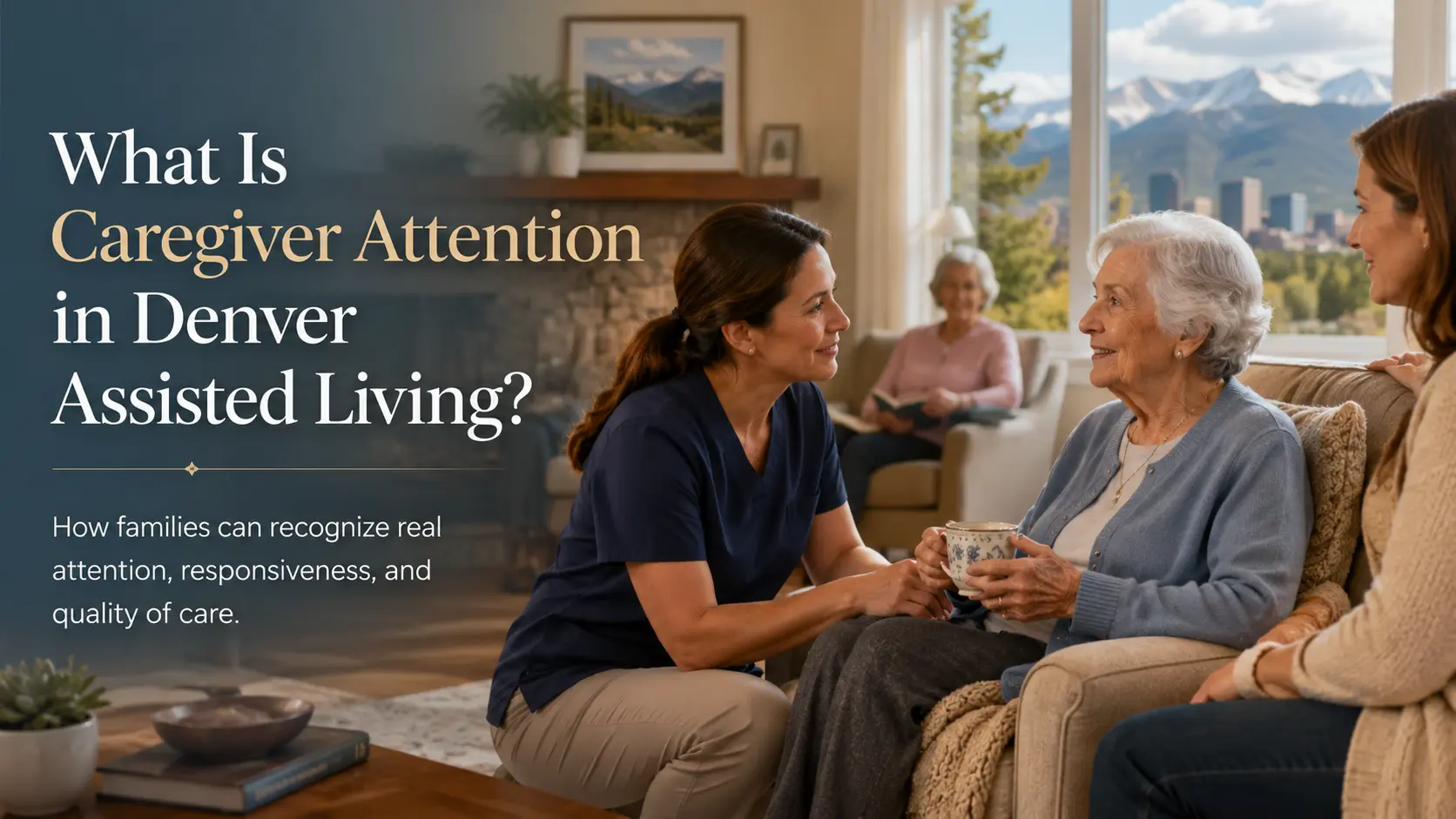
What Is Caregiver Attention in Denver Assisted Living?
Choosing assisted living for a parent often begins with questions about location, price, room size, meals, and amenities. Those details matter, but they do not always reveal what daily life will feel like for the person receiving care.
One of the most important factors is caregiver attention: the time, awareness, consistency, and responsiveness caregivers can give each resident throughout the day and night. It is not simply the number of employees listed on a brochure. It is the ability to notice needs, respond without unnecessary delay, understand personal routines, and provide support without making residents feel rushed or overlooked.
For adult children comparing assisted living facilities, caregiver attention can distinguish a beautiful building from a community where a loved one is truly known.
What Does Caregiver Attention Mean?
Caregiver attention means more than completing a checklist of tasks.
A caregiver may help with bathing, dressing, medications, meals, mobility, toileting, and other daily needs. High-quality attention also includes noticing changes in mood, appetite, balance, sleep, communication, or behavior.
It can be seen in small moments: remembering how a resident likes their coffee, noticing unusual quietness, offering bathroom assistance before discomfort, helping someone dress without rushing, or contacting a family because something meaningful has changed. The care is proactive, not reactive.
These moments require time and familiarity. They are less likely when caregivers support too many residents or do not know them well.
In home-based care, the smaller environment can make it easier for caregivers to remain close to residents and recognize individual patterns. Families should still evaluate staffing and routines rather than assuming every small setting provides the same attention.
Why the Caregiver-to-Resident Ratio Matters
The caregiver-to-resident ratio is one of the clearest indicators of how much direct attention may be available.
A ratio describes how many residents one caregiver supports during a shift. One caregiver serving four residents will generally have more opportunity for personal interaction than one caregiver serving twelve residents.
The ratio is not the only measure of assisted living quality, but it strongly affects caregiver time. When one caregiver is responsible for too many people, residents may wait longer for help with toileting, dressing, meals, transfers, or reassurance. Caregivers may be forced to prioritize urgent needs while less visible concerns go unnoticed.
Ask for the caregiver-to-resident ratio on every shift, including evenings, weekends, and overnight hours. A community may appear well staffed during a weekday tour but operate differently at night.
Also ask whether the ratio includes direct-care employees only. Administrators, chefs, maintenance workers, activity directors, and managers may contribute to the community, but they should not automatically be counted as caregivers available for hands-on assistance.
Attention Depends on Proximity
Caregiver attention is also affected by physical proximity.
Some large assisted living facilities employ many people, but caregivers may be spread across multiple floors, wings, departments, and buildings. A caregiver can be on-site yet still several minutes away from a resident.
Home-based care often places caregivers and residents in a compact setting, making it easier for caregivers to see, hear, and respond to what is happening.
When touring senior care in Denver, notice where caregivers spend their time. Are they present in common areas? Can they see residents from the kitchen or living room? Are they walking long distances between rooms? Do residents depend heavily on call buttons for routine assistance?
Proximity supports proactive care. Nearby caregivers may notice that someone is unsteady, confused, anxious, or attempting to stand before a fall or crisis occurs.
Observable Signs of Strong Caregiver Attention
Families do not have to rely only on marketing claims. During a tour, Families and loved ones can observe many signs.
Watch how caregivers speak to residents. Do they use names, make eye contact, and show patience? Do interactions feel personal, or are they limited to instructions and tasks?
Observe the pace. Caregivers can be busy and still provide excellent care, but constant rushing may indicate that staffing is stretched too thin. Notice whether they have time to listen, explain, reassure, and assist safely.
Look at the residents. Are they clean, comfortable, appropriately dressed, and engaged? Does anyone appear to be waiting for help?
When a resident asks for something, does a caregiver respond or at least acknowledge the request? Strong attention includes communication, not just speed.
Finally, look for familiarity. Caregivers should know residents’ routines, preferences, abilities, and common behaviors. Ask how they learn about each resident. The answer can reveal whether personalized care is part of the culture or simply a marketing phrase.
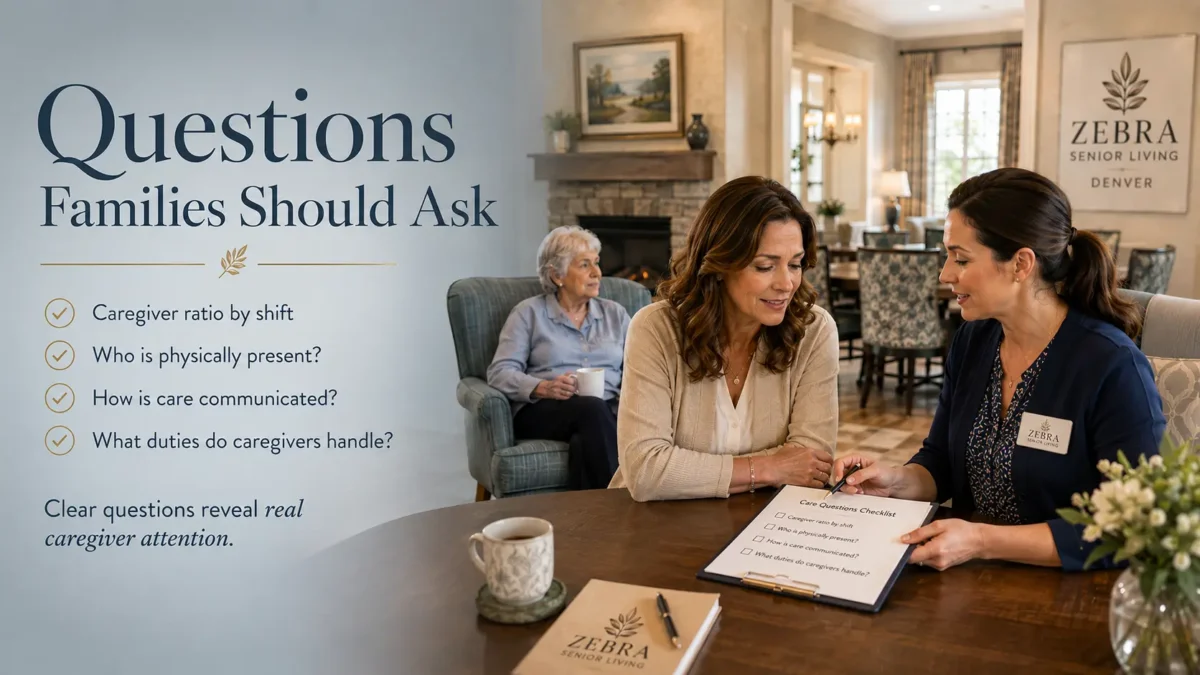
Questions Families Should Ask
Clear questions can help families compare elderly care services more accurately:
- What is the caregiver-to-resident ratio during the day, evening, overnight, and weekends?
- How many caregivers are physically present in the home or care area?
- Are caregivers assigned to specific residents or responsible for an entire building?
- How long have the current caregivers worked here?
- How often do residents see temporary or agency staff?
- What happens when several residents need help at the same time?
- How quickly are toileting and mobility requests usually addressed?
- How are changes in appetite, mood, sleep, balance, or behavior communicated?
- What duties do caregivers have beyond direct resident care?
The final question matters because caregivers may also prepare meals, clean, complete paperwork, manage laundry, answer phones, and supervise residents. Those responsibilities can reduce the time available for personal care.
Consistency Is Part of Attention
A strong staffing ratio has less value when caregivers change constantly.
Consistent caregivers develop knowledge that isn’t fully contained within a chart. They learn how a resident expresses pain, what causes anxiety, which foods are preferred, and how to provide reassurance during confusion.
This is especially important for residents living with dementia, brain injury, Parkinson’s disease, or other conditions affecting communication and cognition.
Frequent turnover can create repeated introductions, lost routines, and reduced trust. Ask how long caregivers typically remain with the community and how the organization supports retention.
Consistency helps caregivers recognize subtle changes because they understand what is normal for that resident.
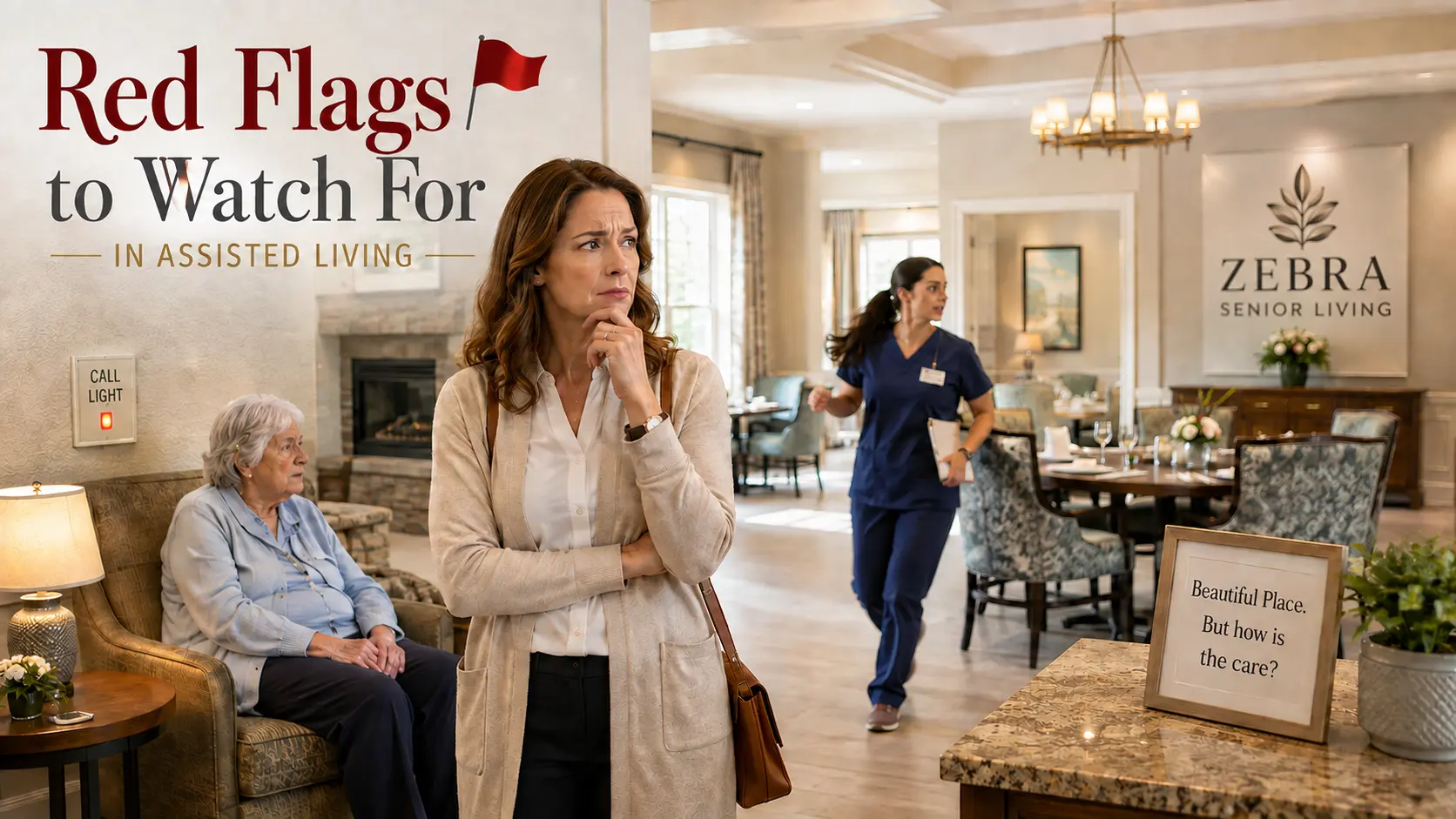
Red Flags to Watch For
Be cautious when a community will not provide a clear staffing ratio, gives different answers depending on who is asked, or counts every employee as direct-care staff.
Other red flags include unanswered call lights, residents waiting for help, overwhelmed caregivers, strong odors, limited interaction, frequent agency staffing, and vague answers about overnight coverage.
Be cautious when a tour focuses mostly on finishes, dining rooms, theaters, salons, and landscaping. Amenities can enhance life, but they do not replace available caregivers.
The greatest luxury in assisted living may be time: time to help, listen, notice, and respond.
Choosing Better Senior Care in Denver
The best assisted living facilities do more than provide housing and complete required tasks. They create an environment where residents are known, respected, protected, and supported by people who have enough time to care.
For Denver families, evaluating caregiver attention means looking beyond appearances. Ask about the caregiver-to-resident ratio. Observe interactions. Evaluate proximity, response times, consistency, and family communication. Consider whether caregivers can provide proactive support or are constantly reacting to urgent requests.
At Assured Senior Living, our home-based care model is built around close caregiver proximity, consistent relationships, and personalized attention. In true residential environments, caregivers can learn each resident’s routines, preferences, personality, and changing needs.
When care is personal, small moments matter. A familiar voice, a patient conversation, a favorite meal, or help offered before it is requested can change the entire assisted living experience.
Schedule a tour of an Assured Senior Living home and see how a smaller setting, strong caregiver presence, and relationship-based care can help your loved one feel safe, valued, and truly at home.
Love, it’s what we do.