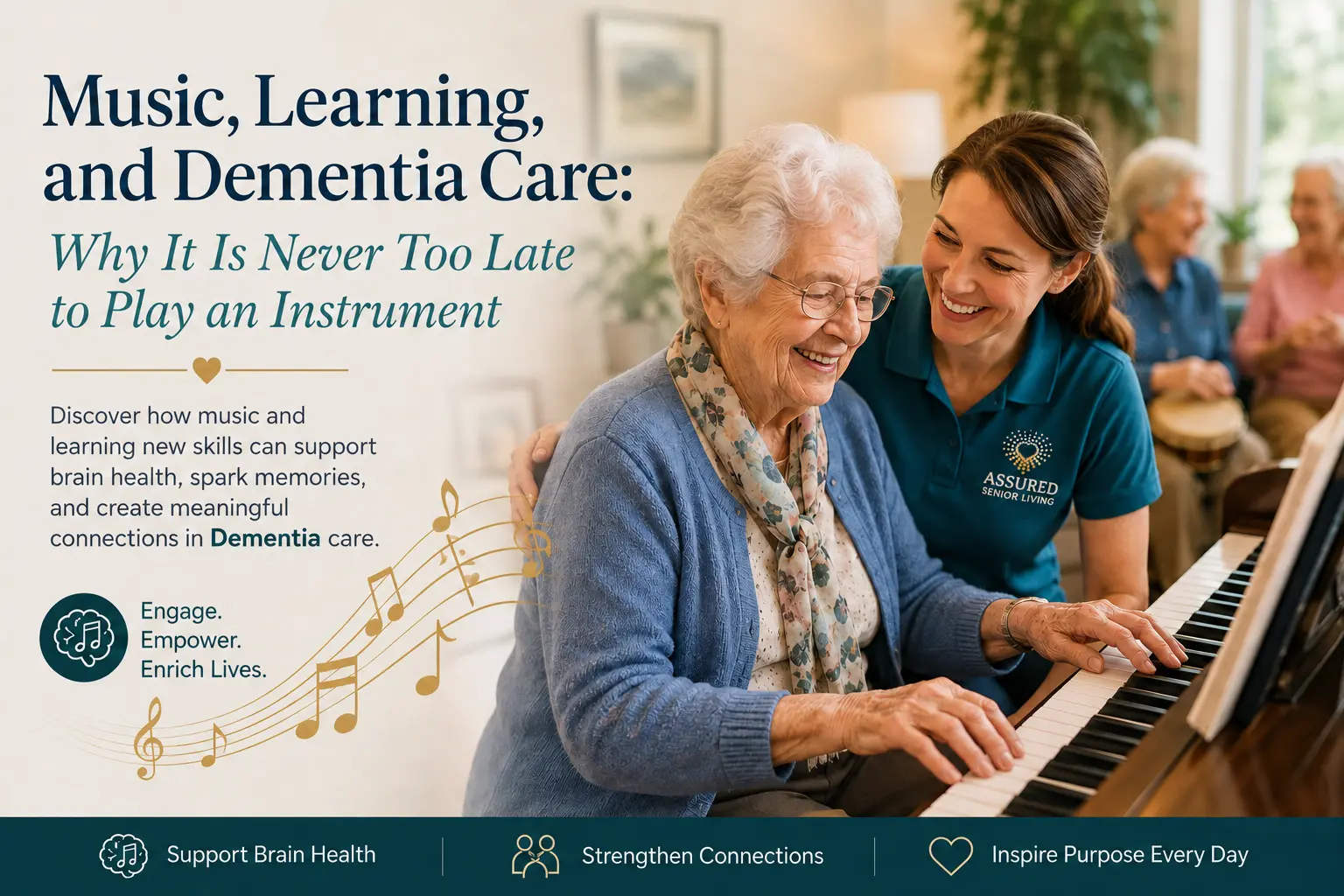
Music, Learning, and Dementia Care: Why It Is Never Too Late to Play an Instrument
When families think about protecting brain health, they often focus on physical exercise, nutrition, medication management, and medical appointments. These are all important. However, one powerful form of cognitive and emotional support is sometimes overlooked: learning to play a musical instrument.
Playing music is more than an enjoyable pastime. It requires the brain to listen, remember, coordinate movement, recognize patterns, read symbols, and respond emotionally—often at the same time. For older adults, this combination of mental, physical, and social activity can make music a valuable part of a broader approach to Dementia care.
Music cannot cure dementia or guarantee that someone will never develop Alzheimer’s disease. However, research suggests that playing an instrument, singing, and participating in musical activities may support cognitive health, strengthen social connection, and contribute to a more meaningful quality of life.
At Assured Senior Living, we believe that supporting brain health is not only about managing decline. It is also about creating opportunities for purpose, curiosity, connection, and continued growth.
Why Playing an Instrument Engages the Brain
Learning an instrument challenges several areas of the brain at once.
A person may need to:
- Listen closely to pitch and rhythm.
- Remember notes or chord patterns.
- Coordinate the hands, eyes, and ears.
- Maintain attention for several minutes.
- Correct mistakes and try again
- Connect sounds with emotions and memories.
Even a seemingly simple activity, such as playing a familiar melody on the piano, can involve memory, concentration, fine motor coordination, timing, and emotional expression.
Research involving older adults has found an association between playing a musical instrument and a lower likelihood of dementia and cognitive impairment. While an association does not prove that music alone prevents dementia, it supports the idea that mentally stimulating activities may contribute to cognitive resilience.
A large study highlighted by the National Endowment for the Arts also found that frequently playing a musical instrument was associated with a lower risk of developing dementia. These findings should not be interpreted as a promise of prevention, but they add to growing evidence that active musical participation may support healthy aging.
Learning Something New Builds More Than Musical Ability
Many older adults believe they are too old to learn an instrument. That belief can prevent them from experiencing one of the most valuable parts of learning: the process itself.
The goal does not need to be performing in a concert or mastering complicated music. The benefit may come from practicing a new skill, paying attention, solving small problems, and experiencing gradual improvement.
A beginner can start by learning:
- A few piano notes
- A simple rhythm on a drum
- Basic chords on a ukulele
- A familiar song on a harmonica
- Handbells or other percussion instruments
- Singing exercises with a group
Each small success can create confidence and a sense of accomplishment.
This is especially meaningful in Dementia care, where people are too often defined by what they can no longer do. Learning a new skill changes the focus. It allows the person to participate, explore, make choices, and experience success.
Even when someone cannot remember every lesson, the emotional experience can still matter. Enjoyment, encouragement, connection, and pride can remain meaningful long after the activity ends.
Music Can Reach Memories for Those Living with Dementia That Conversation Cannot.
Music has a unique relationship with memory.
A familiar song may bring back memories of a wedding, childhood home, religious service, military experience, school dance, or family celebration. A person who struggles to recall recent events may still remember the melody and words of a song learned decades earlier.
Musical memories can sometimes remain accessible even as other forms of memory become more difficult. This is one reason music is frequently used in dementia support and caregiving environments.
The most effective musical experiences are usually personal. Not every older adult enjoys the same style of music. One resident may respond to classical piano, while another prefers gospel, jazz, country, Motown, folk music, or songs from a particular culture.
Families and caregivers can help by learning about the person’s history:
What music did they listen to as a teenager?
Did they sing in church?
Did they play in a school band?
Was there an instrument in their childhood home?
Which songs were played at important family events?
These questions help turn music from background noise into personalized Dementia care.
Music Supports Emotional and Social Well-Being
Brain health is closely connected to emotional health and social engagement.
Isolation, inactivity, and loss of purpose can affect an older adult’s mood and quality of life. Musical activities can create a natural reason to participate with others.
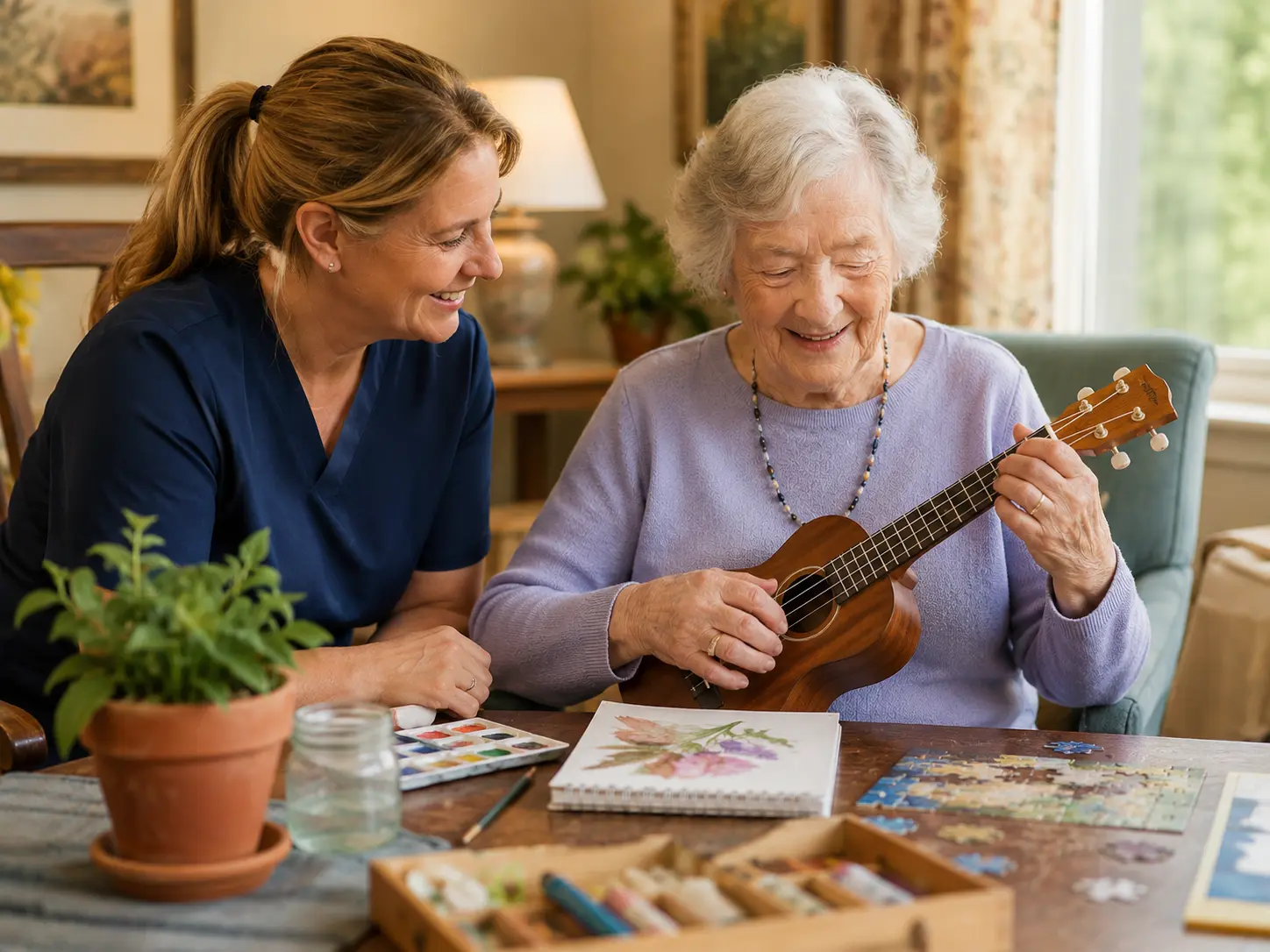
A group sing-along encourages eye contact, listening, laughter, and shared experience. A drum circle gives everyone a role, regardless of musical ability. A caregiver and resident playing simple instruments together can create connection without requiring complicated conversation.
Research has suggested that playing an instrument or singing may help maintain brain health in later life, with musical participation offering cognitive and social stimulation.
Music can also create moments of calm and familiarity. A gentle song may help someone settle into an evening routine. An upbeat rhythm may encourage movement. A favorite melody may reduce feelings of loneliness by reconnecting the person with meaningful memories.
Music should not be viewed as a replacement for medical treatment, professional evaluation, or individualized care. Instead, it can be one part of a supportive environment designed around the whole person.
The Instrument Does Not Have to Be Complicated
Families sometimes assume that musical activities require an expensive instrument or a trained instructor. Neither is always necessary.
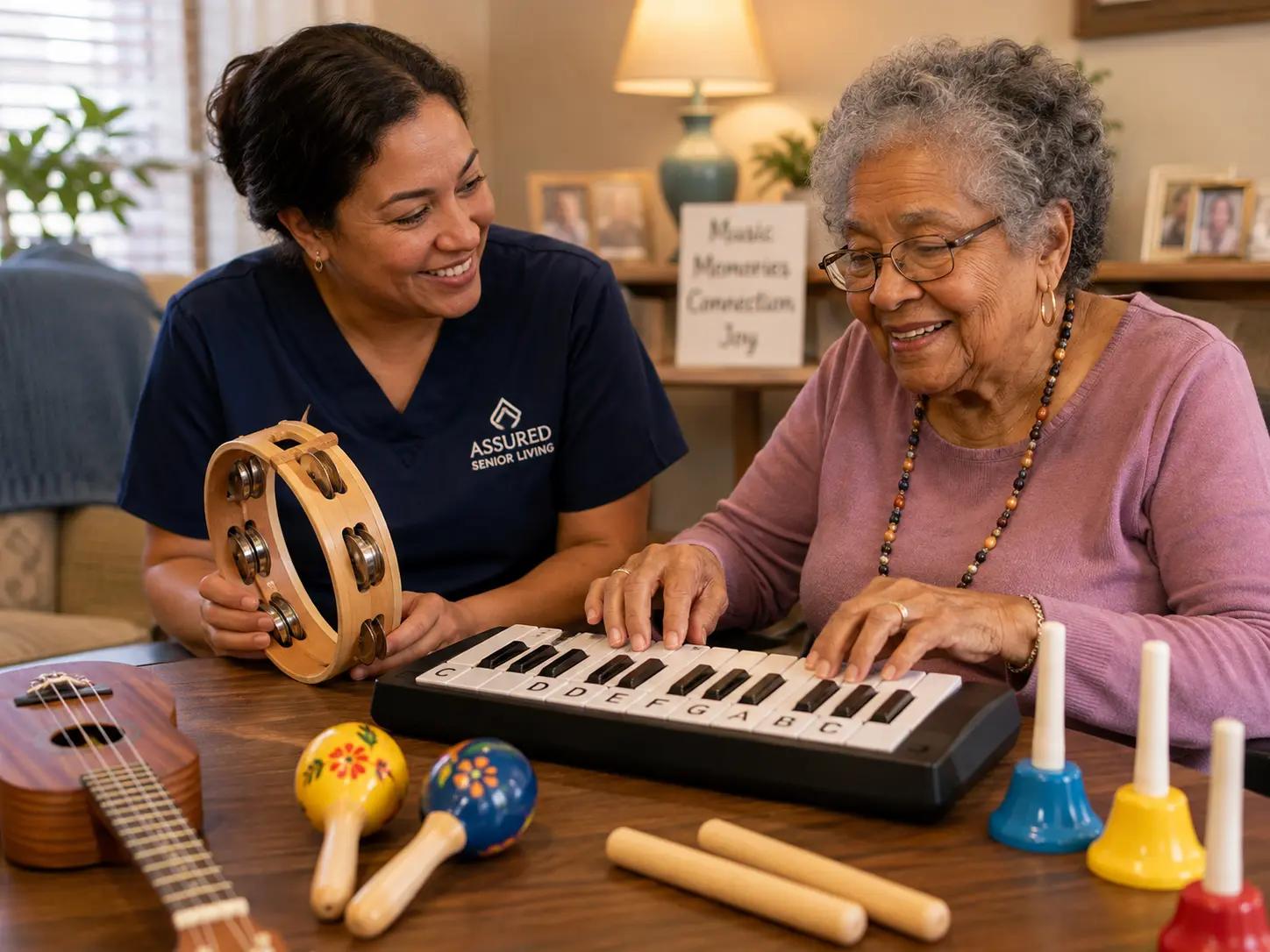
Simple instruments can be highly engaging:
- Hand drums
- Tambourines
- Rhythm sticks
- Maracas
- Handbells
- Keyboards with labeled keys
- Ukuleles with simplified chords
The right choice depends on the person’s interests, mobility, hearing, vision, and cognitive abilities.
Someone with arthritis may find a small keyboard easier than a guitar. A resident with limited fine motor control may enjoy a hand drum. A person who feels overwhelmed by formal instruction may respond better to musical exploration without pressure.
In quality Dementia care, the activity should be adapted to the individual—not the individual forced to adapt to the activity.
The purpose is not perfection. The purpose is engagement.
New Skills Can Create Purpose-Filled Days
Learning does not stop because someone grows older or receives a dementia diagnosis.
Older adults still need opportunities to make decisions, express creativity, contribute, and experience progress. These opportunities are essential to dignity.
Learning a new instrument may provide something to look forward to each week. Practicing a familiar song may become part of a daily routine. Playing for family members may give someone a renewed sense of identity.
The same principle applies beyond music. Painting, gardening, cooking, dancing, puzzles, storytelling, and crafts can all challenge the brain and support a sense of purpose. The best activity is one that feels meaningful to the person.
At Assured Senior Living, we believe activities should be more than items checked off a calendar. They should reflect each resident’s interests, history, abilities, and personality.
A person living with dementia is still capable of joy, connection, discovery, and accomplishment.
Helping a Loved One Get Started
Families can begin by keeping the experience simple and encouraging.
Choose an instrument that is easy to hold or play. Practice for short periods. Select familiar music. Avoid correcting every mistake. Praise participation rather than performance.
Most importantly, join in.
Sing beside your loved one. Tap the rhythm. Play the wrong note and laugh about it. Ask them to show you what they learned.
The relationship created through music may be more valuable than the musical lesson itself.
Creating Better Dementia Care Through Connection
Effective Dementia care is not only about safety, supervision, and assistance with daily needs. It is also about protecting identity, encouraging engagement, and creating reasons to look forward to tomorrow.
Music provides an opportunity to do all three.
At Assured Senior Living, our small-home approach allows caregivers to know residents personally—their preferred routines, favorite songs, important memories, and individual interests. This familiarity helps us create meaningful experiences rather than generic activities.
Whether a resident is rediscovering an instrument they played years ago or touching piano keys for the first time, every note can represent something important: participation, possibility, and connection.
Your loved one’s diagnosis should not define the rest of their story.
To learn more about Assured Senior Living’s personalized approach to assisted living and Dementia care, contact our team and schedule a visit to one of our residential homes.
Love, it’s what we do.