How Caregiver Ratios Affect Denver Assisted Living
Choosing assisted living for a parent involves more than comparing floor plans, dining menus, activity calendars, and attractive common areas. While these features may influence comfort, they do not always reveal how much personal attention a resident will receive each day.
For families comparing assisted living facilities in Denver, one of the most important measures of care is the caregiver-to-resident ratio. This number helps families understand how many residents each direct-care team member is responsible for during a particular shift.
A community may have an impressive building and a long list of employees. Still, those numbers do not necessarily tell you how many caregivers are available to help your loved one when assistance is needed. Understanding caregiver ratios can help you look beyond marketing claims and evaluate the true quality of care provided.
What Is a Caregiver-to-Resident Ratio?
A caregiver-to-resident ratio compares the number of direct-care employees working during a shift with the number of residents they are responsible for supporting.
For example:
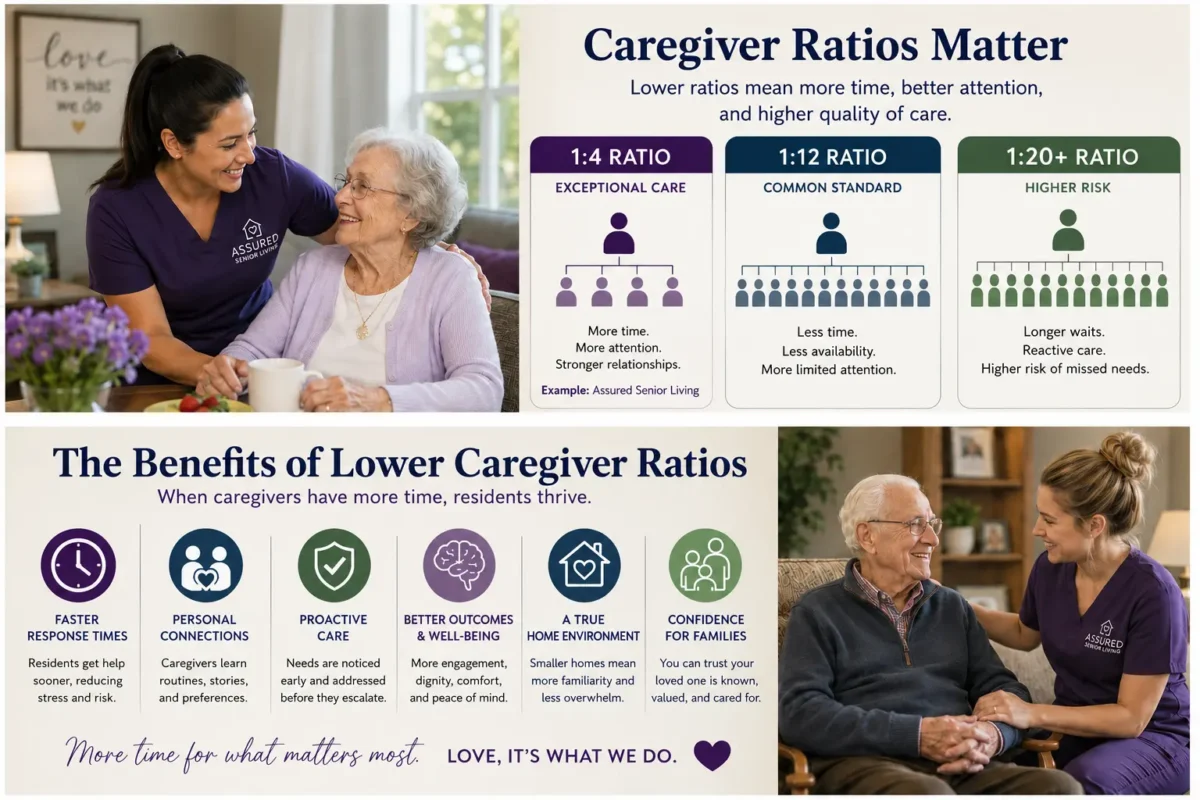
- A 1:4 ratio means one caregiver is responsible for four residents.
- A 1:12 ratio means one caregiver is responsible for eight residents.
- A 1:20 ratio means one caregiver may be responsible for up to 20 residents.
A commonly cited assisted living ratio is approximately one caregiver for every eight residents, although staffing models can vary significantly among communities and shifts.
The ratio matters because it affects how much time a caregiver can realistically spend with each person. Lower caregiver-to-resident ratios generally allow caregivers to provide more individual attention, respond sooner, and become more familiar with residents’ needs and preferences.
However, families should not accept a single ratio without asking follow-up questions. The daytime ratio may be different from the overnight ratio, and a community’s advertised staffing number may include employees who do not provide direct resident care.
Total Staffing Is Not the Same as Direct Care
One of the most common sources of confusion when comparing senior living options is the difference between total employees and direct-care staff.
A community may say it has 100 or even 150 employees. That number might sound reassuring, but it may include:
- Administrators
- Sales and marketing employees
- Maintenance workers
- Housekeeping personnel
- Dining employees
- Human resources staff
- Accounting personnel
- Regional management
- Activity coordinators
These employees may play important roles, but they are not necessarily available to help your parent get dressed, use the restroom, manage a difficult moment, or safely move through the home.
The more meaningful number is the number of direct-care employees physically present and responsible for residents on each shift. Families should focus on direct-care ratios rather than the organization’s total employee count.
When touring Denver assisted living facilities, ask:
“How many direct-care employees are working in this building right now, and how many residents is each caregiver responsible for?”
That question is far more useful than asking how many people the company employs.
How Ratios Affect Response Times
Caregiver availability directly affects how quickly residents receive help.
When one caregiver is responsible for a large number of people, several residents may need assistance simultaneously. One person may need help getting to the bathroom, while another may need medication support, redirection, assistance with dressing, or help returning to a chair safely.
Even a compassionate and skilled caregiver can only be in one place at a time.
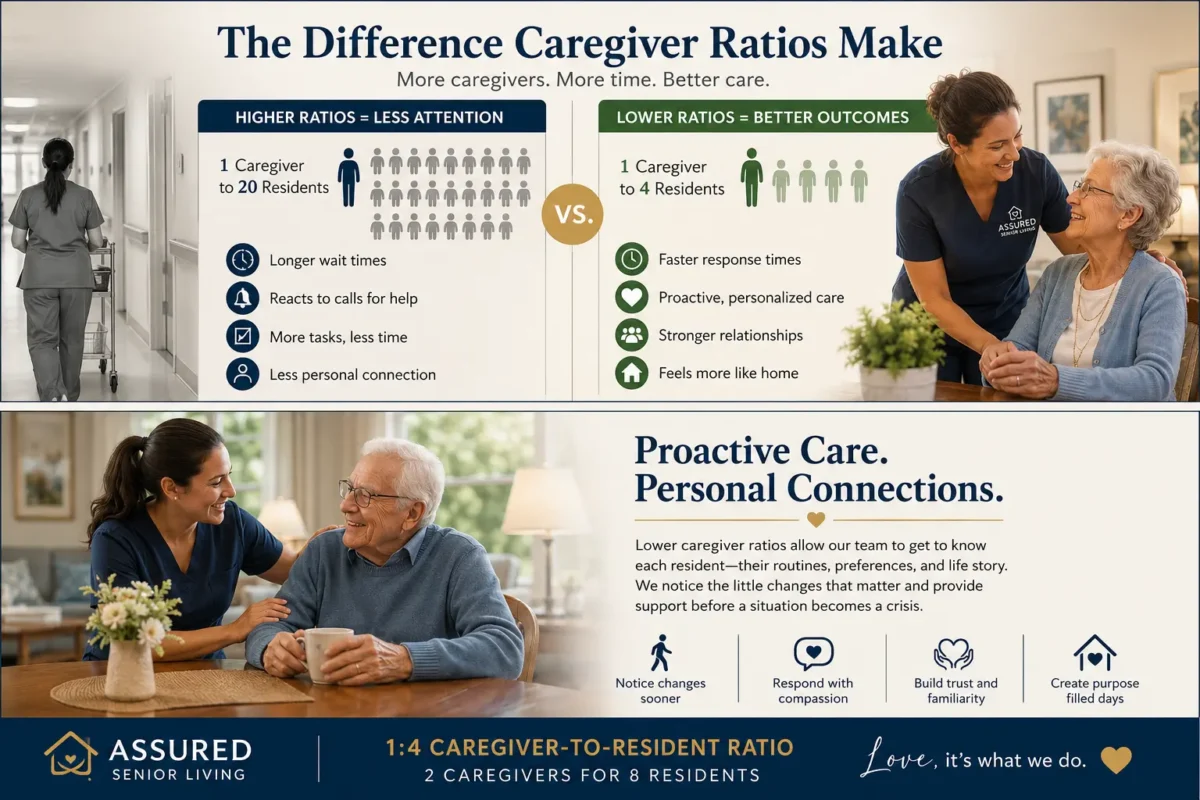
In higher-ratio environments, residents may experience:
- Longer waits for personal assistance.
- Delayed toileting support
- Less help during meals
- Shorter caregiver interactions
- More dependence on call buttons
- Fewer opportunities for proactive support
A lower caregiver-to-resident ratio can make it easier for caregivers to respond before a situation becomes urgent. Instead of waiting for a resident to press a button or call for help, caregivers may be close enough to notice subtle changes in behavior, balance, appetite, or mood.
This is one reason staffing ratios can reveal more about the daily experience than luxury amenities.
Ratios Influence Whether Care Is Proactive or Reactive
Many assisted living facilities operate around a reactive care model. A resident asks for help, activates a call system, or reaches a point where intervention becomes necessary.
Proactive care works differently.
In a smaller home-based care environment, caregivers may be consistently present in the same living spaces as residents. They can notice when someone seems tired, anxious, confused, uncomfortable, or unusually quiet.
That proximity allows caregivers to offer support before the resident has to ask.
Proactive care may look like:
- Offering bathroom assistance before it becomes urgent
- Recognizing early signs of anxiety
- Noticing changes in walking or balance
- Encouraging hydration throughout the day
- Helping a resident transition calmly between activities
- Observing changes in appetite or engagement
- Redirecting confusion before it escalates
These moments are difficult to measure in a brochure, but they often define the real quality of elder care services. At Assured Senior Living we believe proactive care is the best care.
Better Ratios Support Personal Relationships
Personalized care begins with familiarity.
Caregivers need time to learn how a resident communicates, what causes frustration, which routines provide comfort, and how the person prefers to receive help. These details are especially important for individuals living with memory loss, cognitive changes, or a brain injury.
A strong caregiver relationship may include knowing:
- How a resident takes their coffee
- What time they prefer to wake up
- Which foods they enjoy
- What music helps them relax
- How they communicate pain
- Which family stories bring comfort
- What behaviors may signal anxiety?
- How much assistance they want with personal care
When caregivers are stretched too thin, interactions can become task-oriented. The focus shifts to completing showers, medication reminders, meals, and scheduled responsibilities as quickly as possible.
Lower caregiver ratios create more opportunities for genuine connection. Caregivers can sit with residents, listen to their stories, include them in household routines, and provide reassurance without constantly rushing to the next task.
Why Home-Based Assisted Living Can Offer More Attention
Home-based assisted living is provided in a smaller residential setting rather than a large campus or multi-story facility. Residents typically share familiar spaces such as a living room, dining area, kitchen, patio, and backyard.
The physical environment matters because caregivers and residents are often in proximity throughout the day.
In a large community, caregivers may need to cover long hallways, multiple wings, or several floors. In a small residential home, caregivers can often see and hear more of what is happening without depending entirely on technology or call systems.
A smaller home does not automatically guarantee excellent care. Families still need to evaluate training, leadership, communication, turnover, activities, safety practices, and the care plan process.
However, the home-based model can support closer relationships when it is paired with strong direct-care staffing.
Questions Families Should Ask During a Tour
Do not rely only on the ratio printed in a brochure. Ask specific questions about how staffing works in practice.
Consider asking:
- What is the direct caregiver-to-resident ratio during the day?
- Are caregivers required to be awake overnight?
- What is the ratio overnight?
- Does the ratio include nurses, administrators, or non-care employees?
- How many direct-care employees are working in this home today?
- Are caregivers assigned to specific residents or the entire building?
- How often do residents wait for assistance?
- Does the community rely heavily on call buttons?
- How long have the current caregivers worked here?
- How are call-outs and staffing shortages handled?
- How do caregivers learn each resident’s preferences and routines?
Pay attention to what you observe as well as what you are told.
Are caregivers visible? Do they appear calm or rushed? Are they interacting with residents, or are residents sitting alone while caregivers move quickly from task to task? Do staff members know residents by name? Does the environment feel personal?
The answers can help you judge whether the staffing model supports the promises being made.
Assured Senior Living’s Exceptional Staffing Model
At Assured Senior Living, we believe that care should be measured by caregiver access, personal connection, and the time available to support each resident.
Our small residential homes typically support 8 residents with 2 direct-care team members, resulting in an exceptional 1:4 caregiver-to-resident ratio.
That means our caregivers are not responsible for 15, 20, 30, or more residents spread across long hallways and multiple floors. They work within a true home environment where residents remain close, visible, and known.
Our staffing model gives caregivers more opportunities to:
- Recognize changing needs
- Respond quickly
- Provide proactive support
- Learn individual routines
- Build trusting relationships
- Communicate meaningful updates to families.
- Create purpose-filled days
- Offer genuine companionship
We do not believe families should have to choose between professional care and a warm, familiar home. Our model is built to provide both.
Look Beyond the Building and Measure the Care
The most expensive lobby does not help your parent to the bathroom. A long list of amenities does not guarantee that someone will notice a change in mood. A company’s total employee count does not tell you how many caregivers will be present when your loved one needs assistance.
When comparing Denver assisted living facilities, ask the question that reveals how care is truly delivered:
How many residents is each direct-care team member responsible for on every shift?
At Assured Senior Living, our incredible 1:4 caregiver-to-resident ratio is not a marketing slogan. It is a deliberate commitment to better attention, stronger relationships, proactive support, and higher-quality care.
Your loved one deserves more than a room in a senior living facility. They deserve to be known, valued, protected, and loved.
Schedule a tour of an Assured Senior Living home today. Meet our caregivers, experience our small-home environment, and see how two caregivers supporting eight residents can transform assisted living.
Love, it’s what we do.