
Everything to Know About Home-Based Memory Care
When a parent develops memory loss, families must compare options that may sound similar but offer very different levels of support. Should Dad remain in his house with visiting caregivers, move to a large community, or receive care in a small residential home?
For some families, home-based assisted living offers a valuable middle path: professional care in a small residential setting designed around familiar routines, close relationships, and everyday life.
The right choice depends on the person. This guide explains how home-based memory care works, how it differs from other senior care services, and what families should evaluate.
What Is Home-Based Assisted Living for Memory Care?
Home-based assisted living provides residential care in a house-like setting, typically with fewer residents than a traditional community. Support may include meals, personal care, medication assistance, mobility help, supervision, and engagement.
It is not the same as hiring a caregiver to visit an older adult’s original residence for scheduled hours; that is generally called in-home care. Home-based assisted living is one of several assisted living alternatives combining housing and ongoing support.
Quick Answer: Who May Benefit?
Home-based memory care may be a good fit for someone who:
- Needs regular reminders, cueing, supervision, or hands-on help
- Cannot consistently initiate meals, hygiene, medications, or activities
- Becomes overwhelmed by noise, crowds, or complex surroundings
- Needs more support than intermittent in-home care can provide
- Prefers familiar household routines and a smaller social setting
- Needs a secure environment because of exit-seeking or getting lost
Why Memory Loss Changes the Care Equation
Memory loss affects more than the ability to remember names. A person may forget the steps involved in bathing, struggle to explain discomfort, misjudge risk, or stop initiating activities they once enjoyed.
That last change is easy to overlook. A parent may seem content sitting alone when they no longer know how to begin the next part of the day. A full activity calendar does not help if the person cannot remember when an event starts or ask for assistance.
Effective personalized elder care closes that initiation gap. Caregivers offer timely cues, divide tasks into manageable steps, and invite the resident into daily life. Federal dementia-care guidance encourages consistent routines, calm communication, familiar objects, enjoyable activities, and allowing the person to do as much as possible independently.
How a Small Residential Setting Can Support Memory Loss
A simpler environment
A house-like layout may be easier to understand than a building with multiple wings, elevators, and activity rooms. Fewer destinations may reduce the choices a resident must navigate.
During a tour, look for clear walking paths, good lighting, limited clutter, visible bathrooms, handrails, secure exits, and safe outdoor access. The National Institute on Aging recommends adapting the environment as dementia affects judgment and perception.
Caregivers closer to daily life
In a small home, caregivers may spend more time in shared spaces with residents. That proximity can help staff notice that someone skipped breakfast, is walking differently, seems unusually sleepy, or has withdrawn.
Small does not automatically mean attentive. Ask who is present day and night, how many residents they support, and what happens when one resident needs extended assistance.
Routines built around the resident
Predictability can make the day easier to understand. Waking, dressing, eating, resting, and going outdoors at familiar times may provide helpful structure.
The best routine is not identical for everyone. Home-based assisted living should use the resident’s history and preferences to shape an individualized rhythm—rather than forcing everyone into a single schedule.
Meaningful, ordinary engagement
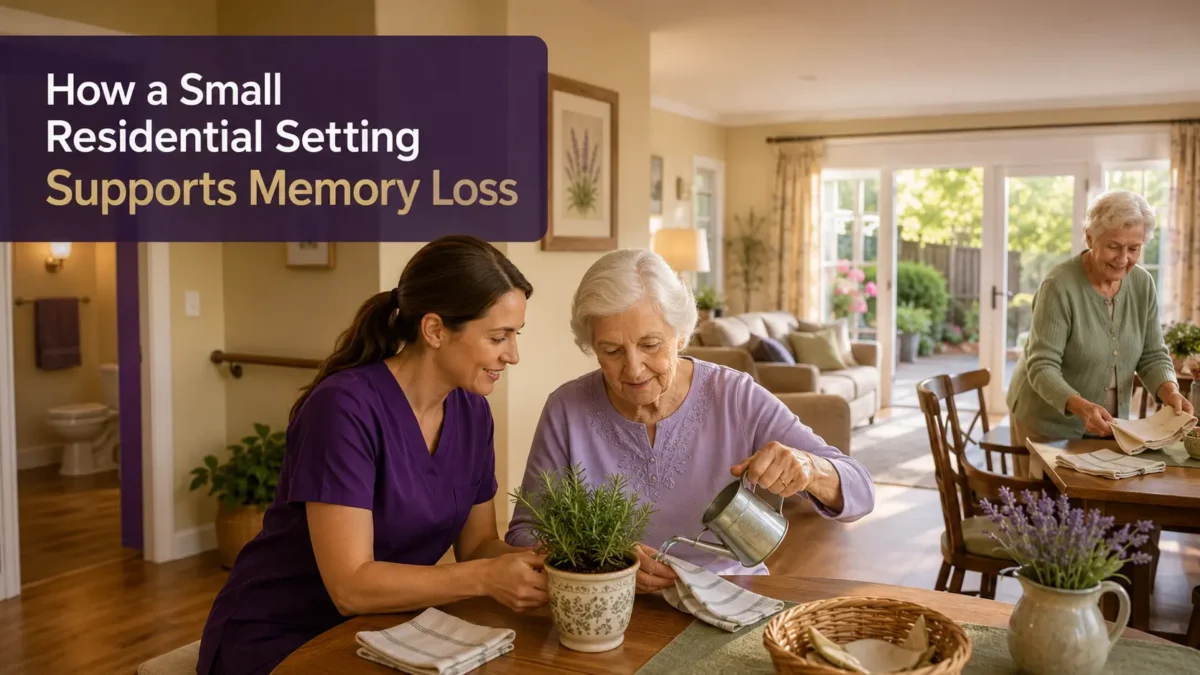
Memory care does not need to look like constant entertainment. Folding towels, watering plants, setting the table, listening to familiar music, looking through photographs, walking outside, or helping prepare vegetables can offer purpose and connection.
The important questions are whether an activity fits the person and whether someone helps initiate it. Alzheimers.gov notes that people with dementia may have difficulty starting activities but may participate when someone plans the activity or joins them.
Consistent relationships
Familiar caregivers can learn how each resident communicates hunger, pain, anxiety, or fatigue. Ask about turnover, dementia training, backup coverage, and communication between shifts. Consistency should come from reliable systems, not one exceptional employee.
Home-Based Memory Care vs. Larger Communities
Neither model is automatically better. They provide different experiences, and quality varies among providers.
| Decision Factor | Home-Based Assisted Living | Larger Memory Care Community |
|---|---|---|
| Setting | Small, House-Like Environment | Purpose-built community with more shared spaces |
| Social Life | Smaller recurring group | Larger peer group and more scheduled programs |
| Daily rhythm | Often centered on household routines | Often follows a structured community schedule |
| Navigation | Fewer destinations may be easier to understand | More space offers variety but may require more wayfinding |
| Possible Fit | Someone who prefers calm and familiarity | Someone who enjoys more people and organized options |
Use this comparison as a starting point. Quality varies, so evaluate what actually happens throughout the day and night.
When Should a Family Reassess the Current Care Plan?
Families often notice a pattern:
- Missed medications, skipped meals, or unexplained weight loss
- Falls, unsafe appliance use, wandering, or getting lost
- Increasing difficulty with bathing, dressing, or toileting
- Unsafe nighttime activity or disrupted sleep
- Isolation and inability to begin familiar activities
- Family caregiver exhaustion or repeated crises despite added help
These signs do not automatically require a move, but they warrant reassessment. The Alzheimer’s Association recommends considering safety, health, personal-care needs, supervision, and meaningful engagement when choosing care. Whenever possible, include the person living with dementia in the decision.
10 Questions to Ask During a Tour:
Family care decisions become clearer when questions focus on real situations:
- How do you assess cognitive, physical, social, and behavioral needs?
- How is the care plan created, reviewed, and shared with family?
- Who is present during the day and overnight?
- What dementia-specific training do caregivers receive?
- How do you help a resident who cannot initiate care?
- What happens if my parent refuses bathing, meals, or medication?
- How do you respond to wandering, anxiety, or sleep changes?
- Which needs can you manage, and what could require a move?
- How are meals, activities, and time outdoors personalized?
- What is included in the price, and what triggers added fees?
Observe as much as you ask. Do caregivers know residents’ preferences? Are residents engaged? Does the home feel calm but alive? Are staff attentive without taking over abilities residents still have?
Make the Decision Around the Person
Memory care should protect safety while helping a person retain comfort, ability, identity, purpose, and connection.
For the right resident, home-based assisted living can combine the familiarity of a home with the presence of professional caregivers. For another person, a larger community or well-supported memory care at home may be the better choice.
The most useful question is not, “Which model sounds best?” It is, “Where will my parent be known, supported, safe, and meaningfully included in everyday life?”
Explore Home-Based Memory Care With Assured Senior Living
At Assured Senior Living, care is personal, proactive, and grounded in relationships. Our small residential homes help caregivers learn each resident’s routines, preferences, and story.
If your family is comparing memory care options in Colorado, schedule a conversation and tour an Assured Senior Living home. See how a smaller setting can create more opportunities for connection, attentive support, and meaningful daily life.
Love, it’s what we do.
Frequently Asked Questions
Is home-based assisted living the same as in-home care?
No. In-home care is delivered in the older adult’s existing residence. Home-based assisted living is residential care in a small, house-like community where the person lives and receives ongoing support.
Can every residential assisted living home support dementia?
No. Ask about licensing, caregiver training, security, overnight coverage, medication support, and the cognitive, behavioral, and physical needs the provider can safely manage.
Is a small memory care home always better?
No. Size shapes the experience but does not determine quality. Choose the setting that meets the person’s needs, preferences, budget, and likely future care needs.