

9 Questions for Denver Home-Based Assisted Living
Choosing assisted living for a parent is about much more than finding an available room.
For families throughout the Denver metro area, one of the most important decisions is determining what kind of environment will allow a loved one to feel safe, comfortable, known, and supported every day.
Large senior living communities are familiar to many families, but another option is becoming increasingly important: Denver home-based assisted living.
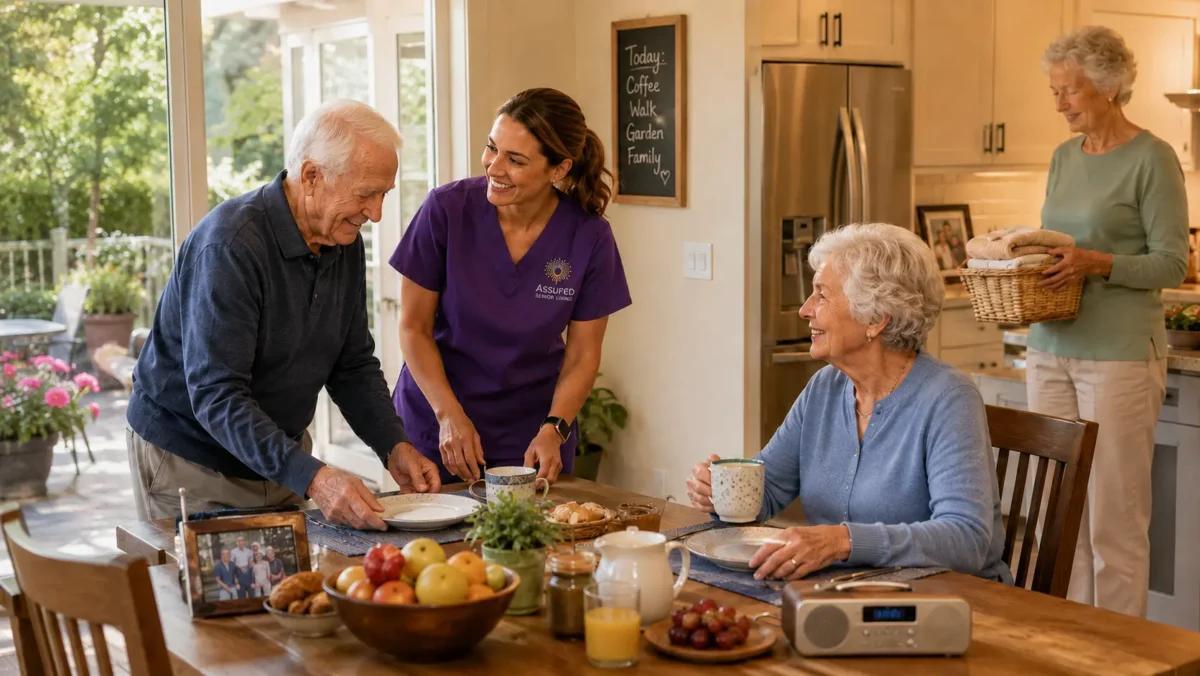
Home-based assisted living typically provides care in a smaller residential environment rather than a large institutional-style community. Residents may share meals around a kitchen table, spend time in familiar living spaces, enjoy a backyard, and receive assistance from caregivers who work closely with a smaller group of residents.
For some older adults, that combination can create a more natural transition from living at home.
But not every small community operates the same way.
A beautiful house does not automatically mean excellent care.
When comparing small residential assisted living options around Denver, families should look beyond décor and marketing materials and ask questions that reveal how care actually works.
Here are nine of the most important questions to ask.
1. How Many Residents Does Each Caregiver Typically Support?
Start with caregiver availability.
Ask:
“During a normal day, how many residents is each caregiver responsible for?”
Do not stop at the total number of employees working in the building.
What matters is how many caregivers are actually available to residents at different times of the day.
A caregiver supporting four residents may be able to notice subtle needs more easily than someone responsible for significantly more people.
Strong caregiver-to-resident attention can affect:
- Response times
- Toileting assistance – which is proactive on specific routines
- Mobility support
- Mealtime help
- Personal hygiene
- Emotional reassurance
- Participation in activities
- Recognition of physical or behavioral changes
Ask about daytime, evening, overnight, weekend, and call-out staffing.
The goal is to understand how available caregivers will really be when your parent needs them.
2. Will the Same Caregivers Regularly Know My Parent?
Consistency matters almost as much as staffing numbers.
Ask:
“Will my parent regularly see the same caregivers?”
Care becomes more personal when caregivers understand the resident rather than simply completing a list of assigned tasks. Care is all about relationships. We must ensure a strong connection between caregivers and residents.
Over time, consistent caregivers may learn:
- How your parent likes their coffee
- What time they prefer to wake up
- Which foods they enjoy
- How they normally walk
- What makes them anxious
- What encourages them to participate
- How they communicate discomfort
- What their normal mood looks like
That familiarity can help caregivers recognize when something changes.
For families seeking personalized care, continuity should therefore be an important part of the conversation.
3. How Do You Personalize Care Around My Parent’s Routine?
Moving into assisted living should not mean that every resident suddenly lives the same schedule.
Ask:
“How will you learn and preserve my parent’s normal routines?”
For example, your mother may have spent decades getting up at 6:30 every morning and drinking coffee before breakfast.
Your father may prefer sleeping late.
One person may enjoy showers in the evening while another prefers mornings.
A strong homelike assisted living community should be able to explain how routines are adapted around individual residents whenever possible.
Ask how the care team learns about a new resident’s:
- Daily habits
- Food preferences
- Sleep schedule
- Personal history
- Hobbies
- Family relationships
- Religious or cultural traditions
- Social preferences
Personalized care begins with knowing the person.
4. What Happens When My Parent Needs Help Right Away?
Families frequently hear about activities, dining, and amenities during an assisted living tour.
Ask about the difficult moments too.
“What happens if my parent suddenly needs help getting to the bathroom, becomes confused, feels weak, or starts calling for assistance?”
Pay attention to how the community describes caregiver proximity.
In a smaller residential setting, caregivers may frequently be in the same kitchen, dining room, living room, hallway, or nearby resident space.
That proximity can make it easier to notice when someone needs assistance before the resident has to ask repeatedly.
When researching assisted living services near Denver, responsiveness should be one of your most important evaluation criteria.
5. What Does a Normal Day Actually Look Like?
Ask:
“Can you walk me through a typical day for someone living here?”
Listen carefully.
Does the answer sound like living in a home?
Or does it sound like residents are mostly waiting for the next scheduled service?
Meaningful daily life might include:
- Preparing for breakfast
- Talking with caregivers
- Listening to music
- Helping set the table
- Gardening
- Folding laundry
- Baking
- Walking outside
- Playing cards
- Looking through photographs
- Watching a favorite sports team
- Visiting with family
- Sitting outside with coffee
Activities do not always need to be elaborate.
Ordinary life can be meaningful.
One advantage families often seek in small residential assisted living is the ability for seniors to continue participating in familiar household rhythms instead of feeling like they are constantly attending programmed events.
6. How Do You Handle Changes in Care Needs?
A resident’s needs may change significantly after moving into assisted living.
Ask:
“What happens if my parent’s care needs increase?”
A parent who initially needs medication reminders and help with meals may eventually need more assistance with:
- Dressing
- Bathing
- Toileting
- Mobility
- Transfers
- Incontinence
- Cognitive changes
- Overnight care
Ask what care the community can provide and what circumstances could require a resident to move elsewhere.
Families should also understand whether increased care changes monthly pricing.
Knowing these answers before admission can reduce surprises later.
7. What Happens Overnight?
One of the most revealing questions families can ask is:
A tour usually happens during the busiest part of the day.
But seniors need care around the clock.
Ask:
- Are caregivers awake overnight?
- How many residents are they responsible for?
- How frequently are residents checked?
- What happens if someone falls?
- What if a resident wakes confused?
- What if someone needs repeated bathroom assistance?
- How are emergencies handled?
The overnight staffing model can tell you a great deal about how a community approaches safety and caregiver availability.
8. How Will Our Family Be Kept Informed?
Good senior care should include the family.
Ask:
“How and when will you communicate with us about changes?”
Families should understand who their primary contact will be and when they can expect communication.
Ask what happens when:
- Your parent falls
- Medication changes
- Appetite decreases
- Behavior changes
- Mobility declines
- A new health concern appears.
- Staff notices a meaningful change.
Good communication is not simply sending an occasional update.
It means families understand what is happening and feel comfortable asking questions.
9. How Will I Know Whether This Home Is the Right Fit for My Parent?
Finally, ask the community:
“What type of resident tends to do especially well here?”
A trustworthy provider should be able to explain who is—and is not—a good match for its care model.
Then ask yourself a few questions during the tour.
Does the home feel calm but alive?
Do caregivers know residents by name?
Are caregivers interacting naturally with residents?
Do residents appear comfortable around staff?
Does the kitchen smell like food is actually being prepared?
Are residents spending time in shared household spaces?
Do caregivers seem rushed?
Can staff explain what individual residents enjoy?
The answers may tell you more than a brochure ever could.
Look Beyond the Building
Finding the right Denver home-based assisted living community is not primarily about choosing the newest building, biggest lobby, or longest amenities list.
It is about understanding what your parent’s life will feel like once you leave after the visit.
Will someone know how they take their coffee?
Will a caregiver recognize that they seem unusually tired today?
Will someone notice when they become anxious?
Will caregivers have enough time to sit, listen, and help?
Will the environment still feel like a home?
Those are the questions that matter.
When touring assisted living services near Denver, compare communities based on caregiver availability, consistency, personalization, communication, daily routines, and the relationships you observe between residents and staff.
Because ultimately, choosing assisted living is not simply about finding somewhere for a parent to live.
It is about finding a place where they can continue to be known, respected, supported, and cared for as an individual.
See the Assured Senior Living Difference for Yourself
Choosing assisted living is easier when you can experience the environment firsthand.
At Assured Senior Living, our unique residential assisted living homes offer a smaller, more personal setting focused on personalized care, close caregiver attention, familiar routines, and a true sense of home.
If you are exploring Denver-based assisted living for someone you love, see what sets our approach apart.
Tour an Assured Senior Living home. Meet our caregivers. See how residents live each day. Ask the questions that matter most to your family.
Schedule Your Tour Today
Discover a more personal approach to assisted living—where your loved one can be known, supported, respected, and truly at home.