The Hidden Cost of Staff Turnover: The Question Every Family Forgets to Ask
When families tour a senior living community, they usually ask the same questions.
How much does it cost?
What activities do you offer?
How often are meals served?
What does a typical day look like?
How large are the rooms?
Is there a beauty salon?
Can Mom bring her own furniture?
These are all important questions.
The question almost no family asks may have a greater impact on your loved one’s quality of life than almost anything else: “How long have your caregivers been here?”
“How long have your caregivers been here?”
Not the executive director.
Not the marketing team.
Not the nurse.
The caregivers.
The people who wake your loved one in the morning.
The people who help them get dressed.
The people who know when something doesn’t seem quite right.
The people who become part of their daily lives.
Trust cannot be purchased, even when beautiful buildings can be built and luxury amenities added.
Trust is earned.
And every time a caregiver leaves, a little bit of that trust leaves with them—and families feel it too.
The Hidden Cost Nobody Puts in the Brochure
Every senior living community experiences turnover.
Caregiving is meaningful work, but it is also emotionally and physically demanding.
People relocate.
Life circumstances change.
Caregivers pursue new opportunities.
Some level of turnover is unavoidable.
The problem isn’t that caregivers occasionally leave.
The problem is when turnover becomes constant.
Families often think of staff turnover as an employment issue, but it directly affects residents.
It’s much more than that—it affects trust.
For residents, every resignation has an impact:
- A familiar face disappears, and a new staff member has to be trained.
- A trusted relationship ends, and now they have to begin again.
- Daily routines are disrupted, and fear of the unknown may begin.
- Personal preferences are forgotten.
- Peace of mind is removed.
- Confidence has to be rebuilt from the beginning.
For someone living independently, these changes might simply feel inconvenient.
For someone living with dementia, they can feel overwhelming.
Every New Caregiver Starts at Zero
Imagine meeting someone for the first time and asking them to care for your parent.
They don’t know your mother’s favorite breakfast or when she wants it.
They don’t know your father’s bedtime routine.
They don’t know which music calms anxiety.
They don’t know the stories that bring a smile.
They don’t know that your loved one always folds their napkin after dinner because that’s what they’ve done for 60 years.
Those details aren’t insignificant, as they are the foundation of personalized care.
Every new caregiver begins with a checklist.
Experienced caregivers work from relationships.
That’s a profound difference.
Dementia Doesn’t Respond to Credentials Alone
Families often assume the most important thing is clinical training, but dementia care is about much more than credentials.
Training matters.
Experience matters.
Licensure matters.
But dementia care is about much more than credentials.
It is about familiarity.
A caregiver who has spent months with the same resident begins to recognize subtle changes that no assessment form can capture.
They know when “I’m fine” actually means something is wrong.
They notice when someone who usually enjoys breakfast suddenly isn’t hungry.
They recognize the difference between fatigue, sadness, pain, and confusion.
They understand that behaviors often have a cause.
A new caregiver sees behaviors.
An experienced caregiver sees the person.
That difference changes outcomes.
The Power of Familiar Faces
People living with dementia often lose short-term memory long before they lose emotional memory, so familiarity matters.
They may forget names.
They may forget conversations.
They may forget yesterday.
But they often remember how someone makes them feel.
A familiar caregiver creates emotional safety.
The sound of a familiar voice.
The rhythm of familiar routines.
The comfort of a trusted smile.
These things reduce uncertainty.
And when uncertainty decreases, anxiety often decreases too.
Many of the behaviors families worry about—agitation, resistance to care, confusion, pacing—can become more manageable when residents feel safe and understood.
Consistency isn’t simply comforting.
It’s therapeutic.
Consistency builds trust and trust builds love.
The Knowledge That Never Gets Charted
Every resident has a care plan, but the most valuable information often never appears in a chart.
It documents medications, diagnoses, mobility needs, and physician orders.
Those are essential and critical, but the most valuable information often does not appear in a chart.
It lives in the minds of caregivers who spend every day with residents.
Consistent caregivers know:
- Which blanket brings comfort.
- How to truly connect with each resident.
- Which chair a resident always chooses.
- Which television show starts a conversation.
- What time is best to connect and love?
- Which family photos spark happy memories.
- Which words create calm during moments of confusion.
- How the resident wants to assist around the home.
- Which approach works best when someone refuses care.
- Which joke always earns a laugh.
This is institutional knowledge.
And every time an experienced caregiver leaves, some of that knowledge—and some of that trust—walks out the door.
The next caregiver begins the process all over again.
Turnover Doesn’t Just Affect Residents
Families feel it too.
One of the greatest comforts for a son or daughter is walking into a community and hearing a caregiver say:
“Good morning, Mary. Did your grandson have his baseball game this weekend?”
That tells families something powerful. This shows a deep personal connection.
Their loved one is known.
Not managed.
Known.
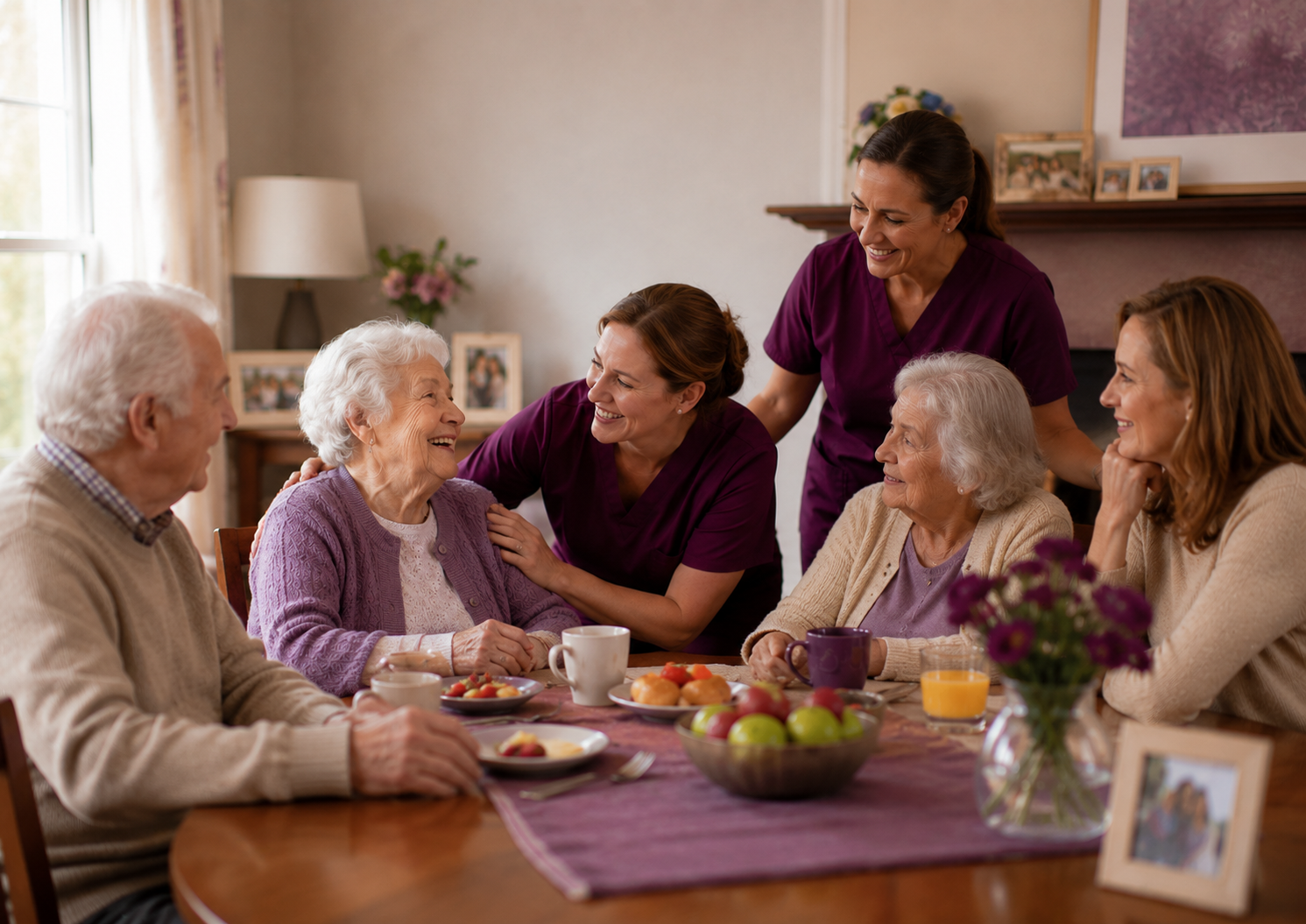
When the same caregivers greet families month after month, trust grows naturally.
Communication becomes easier. Communication becomes trusted and transparent.
Concerns are identified earlier.
Families stop wondering whether someone understands Mom’s personality because they’ve seen trust build over time.
That kind of confidence cannot be manufactured.
It develops through consistency.
Why Small Homes Create Stronger Relationships
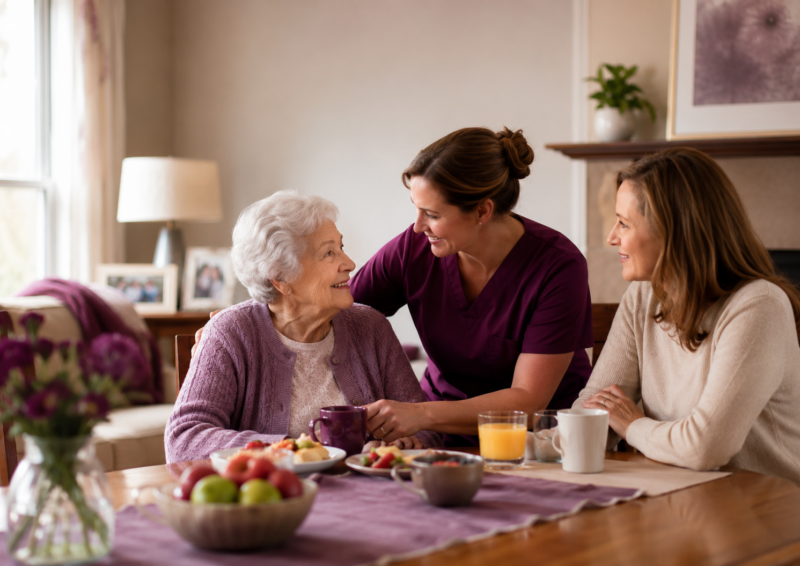
One of the greatest strengths of the small-home model is the depth of relationships, not simply the size of the residence.
It’s the depth of relationships.
When caregivers consistently care for the same small group of residents, they become part of each other’s daily lives.
Meals are shared together.
Birthdays are celebrated together.
Conversations happen naturally throughout the day.
Care doesn’t feel rushed from one room to another.
It feels personal.
Residents aren’t just another assignment.
They’re neighbors.
Friends.
Extended family.
That’s one reason why so many families tell us the home “just feels different.”
What they’re sensing isn’t the building.
It’s the relationships inside it.
Ask the Question That Matters
When touring senior living communities, ask questions that go beyond appearances and get to what matters.
Ask:
- How long has your average caregiver been here?
- How long has the executive director or administrator been there?
- What is your caregiver retention rate?
- How many caregivers have been with the community for more than two years?
- Do residents typically see the same caregivers every week?
- How do you build consistency for residents living with dementia?
You may be surprised by the answers.
Or by the hesitation to answer.
Because caregiver longevity tells families something brochures never can.
It tells them whether relationships are being built—or constantly restarted.
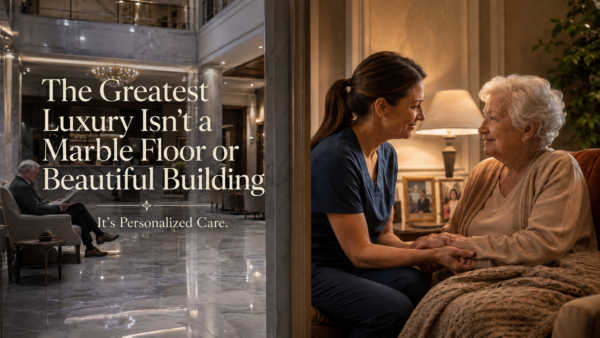
The Greatest Luxury Isn’t Marble Floors
Many communities invest millions of dollars in impressive amenities.
Beautiful lobbies.
Restaurants and bars.
Rooftop decks and outdoor firepits.
Movie theaters.
Coffee bars.
Fitness centers.
Those things can enhance a resident’s experience, but they don’t define the care experience.
But they don’t hold someone’s hand during moments of fear. They don’t truly connect on a human level.
They don’t recognize the first signs of illness.
They don’t notice when a resident is quieter than usual.
People do.
The greatest luxury in senior living isn’t found in architecture.
It’s found in time.
Time to build relationships.
Time to earn trust.
Time to truly know another human being.
Before You Choose a Community…
Before you decide where your loved one will live, ask yourself one simple question: would you rather your parent be surrounded by strangers in a beautiful building… or by familiar faces who know them, understand them, and genuinely care about them?
Would you rather your parent be surrounded by strangers in a beautiful building…
Or by familiar faces who know them, understand them, and genuinely care about them?
Because long after the excitement of the tour has faded…
Long after the dining menu changes…
Long after the amenities become routine…
Relationships are what remain.
At Assured Senior Living, we believe consistency is more than good customer service.
For residents living with dementia, it is part of their care.
Because the best caregivers don’t just know how to provide care.
They know who they’re caring for.
And that makes all the difference.
Do not choose a community based only on how it looks. Choose one based on how deeply your loved one will be known.
Schedule a personal tour of Assured Senior Living and experience the difference that familiar faces, consistent caregivers, and truly personalized care can make.
Your loved one deserves more than a beautiful place to live. They deserve a place where they are known, valued, and loved.