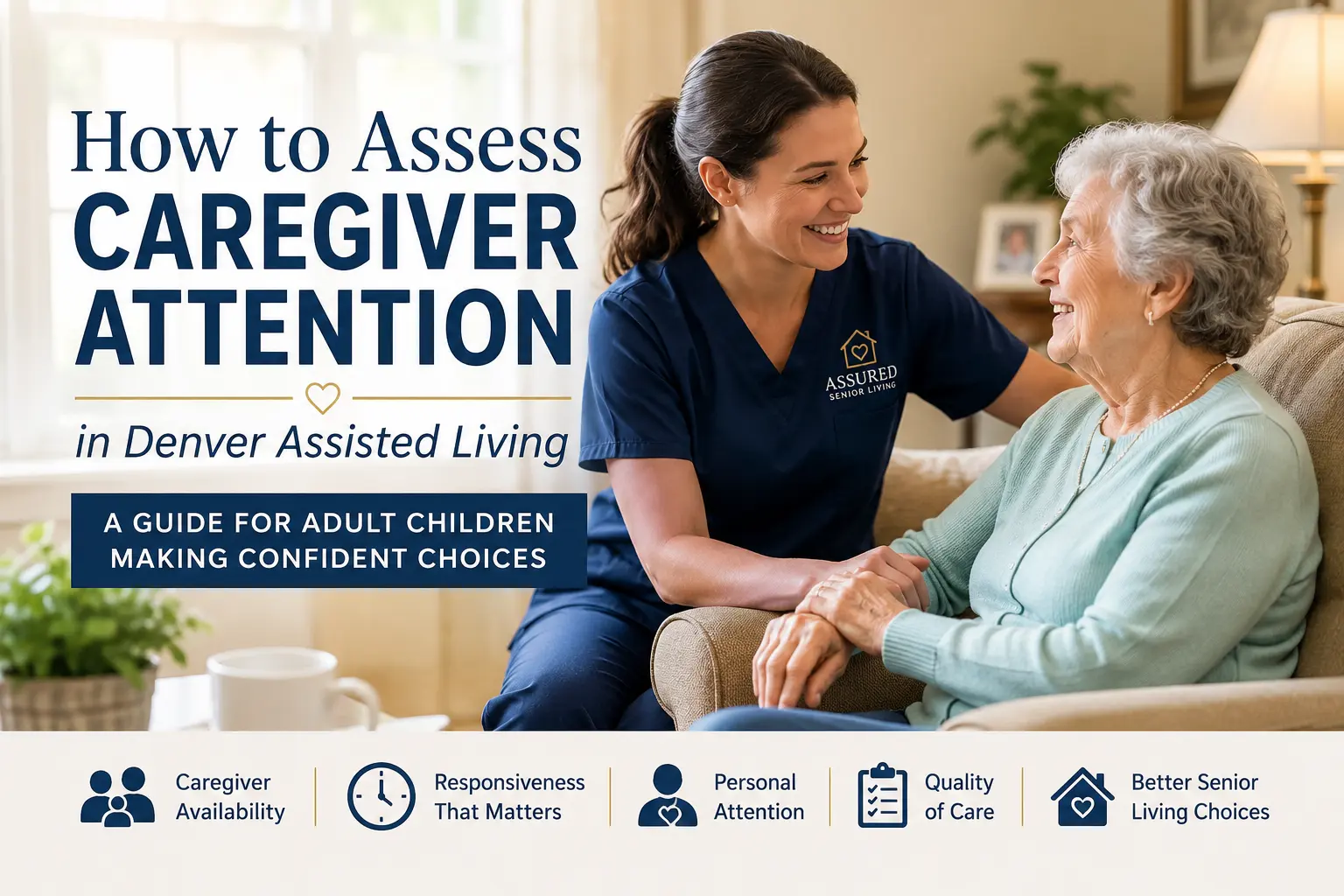
How to Assess Caregiver Attention in Denver Assisted Living
When families begin comparing assisted living facilities in Denver, they often focus on room sizes, amenities, meal plans, activities, and monthly costs. These factors matter, but they do not determine what your parent’s daily experience will feel like.
The most important question may be: Will caregivers have enough time to notice, respond to, and genuinely know my loved one?
Caregiver attention influences safety, comfort, emotional well-being, personal dignity, and the overall quality of care. A beautiful community can make a strong first impression, but attractive surroundings cannot compensate for caregivers who are rushed, overextended, or unfamiliar with residents’ needs.
For adult children evaluating Denver senior living options, the following criteria can help determine whether a community provides meaningful personal attention or promises it.
Look Beyond the Total Number of Employees
Many assisted living communities advertise the size of their overall staff. A community may employ administrators, housekeepers, maintenance workers, culinary employees, activity coordinators, nurses, marketers, and caregivers.
That total does not tell you how many people will be available to help your parent during a typical shift.
Ask specifically:
- How many direct-care caregivers are working right now?
- How many residents are they responsible for?
- Does the ratio change during evenings or overnight?
- Are supervisors included in the advertised staffing numbers?
- Are caregivers assigned to one area, or are they expected to cover several?
The number that matters most is not total employment. It is the number of available caregivers providing hands-on support when residents need assistance.
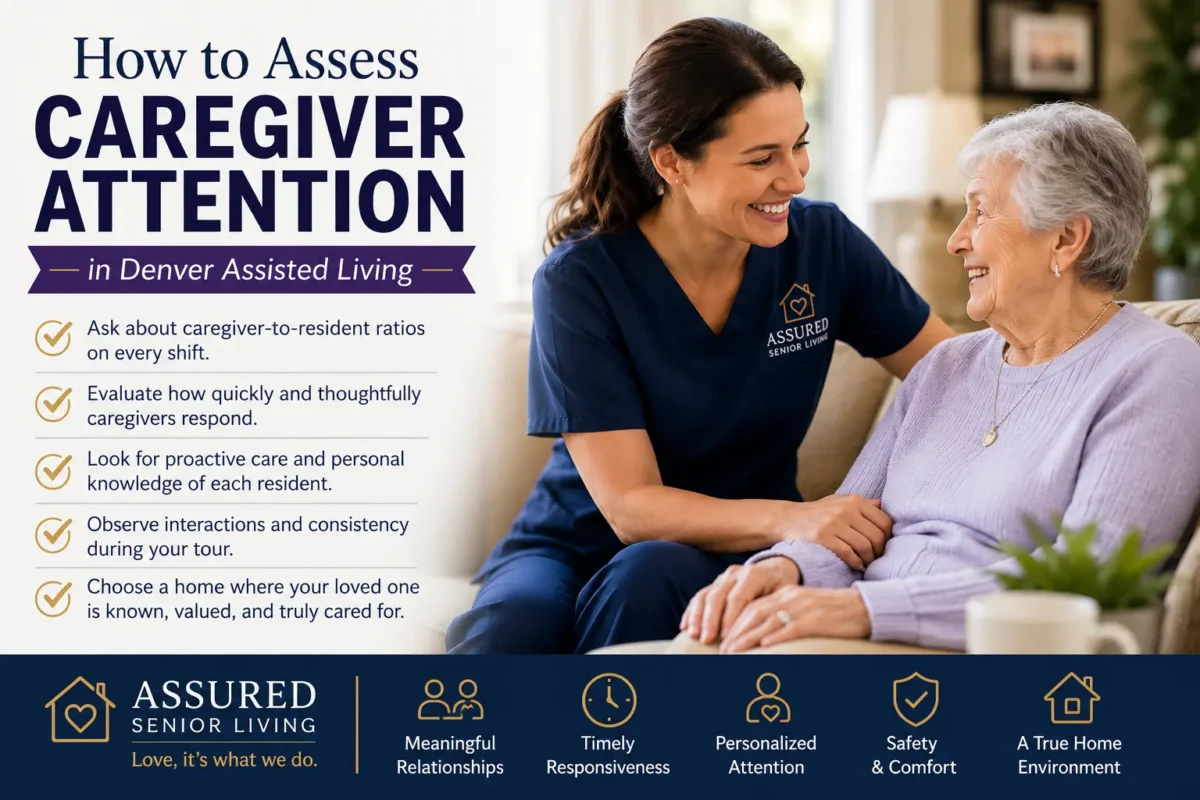
Ask for the Caregiver-to-Resident Ratio on Every Shift
A caregiver-to-resident ratio is one of the clearest ways to evaluate caregiver availability, but families should request more than a single number.
Some communities quote their strongest daytime ratio even though staffing decreases during evenings, weekends, and overnight hours. Others calculate ratios using employees who are technically present but are not regularly providing direct care.
Ask for the ratio during:
- Morning routines
- Afternoon activities
- Evening meals and bedtime
- Overnight hours
- Weekends and holidays
Morning and evening shifts deserve particular attention. These periods often involve bathing, dressing, grooming, toileting, medication assistance, meals, transfers, and bedtime routines. When too few caregivers are available, residents may wait longer, feel rushed, or receive care according to the facility’s schedule rather than their own preferences.
A smaller home-based care setting can make caregiver availability easier to understand. Instead of trying to determine how many caregivers cover multiple floors or hallways, families can ask how many caregivers support residents in a single home.
Evaluate Responsiveness, Not Just Availability
A caregiver may be physically present without being meaningfully available. Responsiveness involves reacting promptly and positively when another person needs support.
During a tour, watch what happens when a resident asks for assistance. Does a caregiver stop, make eye contact, and respond respectfully? Is the resident acknowledged immediately, even when the request cannot be completed at once? Or is the resident told to wait without reassurance?
Ask the community:
- What is your call button response time?
-
- Will you share the data?
- How long do residents typically wait for help?
- How are requests communicated to caregivers?
- What happens when several residents need assistance simultaneously?
- How are nonverbal residents monitored?
- How do caregivers recognize needs before a resident asks?
A call-button response time can provide useful information, but it should not be the only measure. Residents with dementia, communication challenges, limited mobility, or a brain injury may not reliably press a button. High-quality elder care services should include observation and proactive support rather than depending entirely on residents to request care.

Determine Whether Care Is Proactive or Reactive
Reactive care begins after a resident signals a need. Proactive care begins with caregivers knowing the resident well enough to anticipate the resident’s needs.
For example, an attentive caregiver may notice that a resident usually needs the restroom shortly after breakfast, becomes anxious before dinner, drinks more water from a favorite cup, or walks less steadily when tired.
This knowledge develops over time through proximity and consistent relationships.
Ask caregivers how they learn each resident’s:
- Daily routines
- Food preferences
- Communication style
- Mobility patterns
- Personal history
- Emotional triggers
- Favorite activities
- Early signs of discomfort or illness
Listen for detailed answers. General statements such as “We treat everyone like family” sound reassuring, but they do not explain how personal knowledge is developed, documented, and shared.
The strongest communities should be able to describe specific systems for learning and honoring individual preferences.
Observe the Caregivers During Your Tour
Tours frequently focus on model rooms and common spaces, but families should spend just as much time observing caregiver interactions.
Notice whether caregivers:
- Address residents by name.
- Speak directly to them instead of over them.
- Knock before entering rooms.
- Explain what they are doing.
- Offer choices
- Sit down during conversations.
- Respond patiently to repeated questions.
- Notice residents who are quiet or withdrawn.
- Appear rushed or emotionally available.
Also observe the residents. Do they appear comfortable approaching caregivers? Are they engaged or sitting unattended? Do caregivers initiate conversation, or do they interact only while completing a task?
Personal attention is often visible in small moments. A caregiver adjusting a resident’s sweater, remembering how someone takes coffee, or noticing a change in mood may reveal more about the community than a prepared presentation.
Ask About Caregiver Consistency and Turnover
A favorable staffing ratio loses some of its value when residents constantly encounter unfamiliar caregivers.
Consistent staffing allows caregivers to recognize subtle changes in appetite, behavior, speech, mobility, sleep, and emotional well-being. Those observations can help families and healthcare providers respond before a minor issue becomes a larger concern.
Ask:
- How long have the current caregivers worked here?
- How frequently are agency employees used?
- Will my parent see the same caregivers regularly?
- How are new caregivers introduced?
- What is the annual caregiver turnover rate?
- What happens when a familiar caregiver calls out?
Do not limit this conversation to the administrator or nurse. Ask about the direct-care employees who will help your parent get dressed, eat meals, use the restroom, participate in activities, and settle in at night.
Relationships require consistency. A rotating stream of unfamiliar employees can make care feel transactional, especially for residents living with memory loss or anxiety.
Understand How Caregivers Spend Their Time
Caregiver attention is affected by workload. In some communities, direct-care employees are also responsible for laundry, cleaning, meal preparation, documentation, medication support, and answering calls throughout a large building.
Ask for a realistic explanation of a caregiver’s typical shift.
You should understand:
- How much time is devoted to direct resident care
- Which household duties caregivers perform
- Whether caregivers leave the living area for extended periods
- How documentation requirements are managed
- Who covers residents during breaks?
- Whether additional support is available during emergencies
In a thoughtfully structured residential model, household activities can create opportunities for engagement. Residents may gather near the kitchen, participate in meal preparation, fold towels, or talk with caregivers during everyday routines.
However, household responsibilities should never leave residents without adequate supervision or personal support.
Consider the Advantages of Smaller Residential Settings
Home-based assisted living typically provides support in a smaller, house-like environment rather than a large campus. Families should still compare services, caregiver attention, activities, costs, and the community’s ability to meet changing needs.
Smaller settings may make it easier for caregivers to remain physically close to residents and understand their daily patterns. Shorter distances can also reduce the time spent walking between rooms, floors, and separate wings.
However, size alone does not guarantee quality. Families should apply the same decision criteria to every community:
- Are enough trained caregivers present?
- Are they responsive?
- Do they know residents personally?
- Are routines individualized?
- Is staffing consistent?
- Can the home safely support future care needs?
The best environment is not simply the smallest or largest. It is the one where the care model, staffing structure, training, and culture support your loved one as an individual.
Review Communication With Families
Personal attention should also be reflected in family communication.
Ask who will contact you when there is a change in your parent’s condition. Determine whether updates come from someone who directly knows your loved one or from an administrator reviewing secondhand notes.
Clarify how the community communicates:
- Medication changes
- Falls or safety concerns
- Appetite changes
- Behavioral changes
- Medical appointments
- Participation in activities
- Emotional well-being
- Changes in care needs
Strong communication should include more than incident reports. Families should hear about positive moments, new friendships, favorite activities, and meaningful accomplishments.
Use a Clear Decision Scorecard
After each tour, rate the community from one to five in these categories:
- Direct-care staffing on each shift
- Caregiver responsiveness
- Staff consistency and turnover
- Knowledge of individual residents
- Proactive supervision
- Respectful communication
- Personalized daily routines
- Family updates
- Ability to accommodate changing needs
- Overall caregiver warmth and engagement
Complete the scorecard immediately after leaving. Specific observations are more valuable than general impressions.
Instead of writing “The staff seemed nice,” record what you witnessed: “The caregiver noticed a resident becoming restless, approached her by name, and invited her to help set the table.”
Choose the Community Where Caregivers Have Time to Care
When comparing Denver assisted living facilities, look beyond polished finishes, activity calendars, and total staffing claims. Focus on the people who will be beside your parent throughout the day.
Ask whether caregivers have enough time to listen without rushing, notice small changes, honor familiar routines, and develop genuine relationships.
At Assured Senior Living, we believe the greatest luxury in senior living is care itself. Our small-home model is designed around close caregiver access, consistent relationships, proactive support, and purposeful days. In many of our homes, two direct-care caregivers support just eight residents, helping our team recognize individual routines, preferences, stories, and changing needs.
Your loved one deserves more than a room in a facility. They deserve to be known, valued, protected, and loved in a true home environment.
Contact Assured Senior Living today to schedule a personal tour of one of our Denver-area residential homes. See the difference that consistent caregivers, meaningful relationships, and genuinely personalized attention can make. Do not settle for promises about quality of care—experience a community where love is present in every interaction.
Assured Senior Living: Love, it’s what we do.