How Home-Based Assisted Living Supports Social Connection
When families begin looking for care for a parent experiencing memory loss, safety is often the first concern. Medication management, fall prevention, nutrition, and help with daily activities all matter.
But another need can be just as important: connection.
Older adults experiencing memory loss may gradually become less socially engaged. Conversations can become more difficult. Large groups may feel overwhelming. Friends may visit less often. Activities that once felt natural can become harder to initiate.
For some seniors, home-based assisted living can provide an environment where social interaction feels more comfortable and more natural.
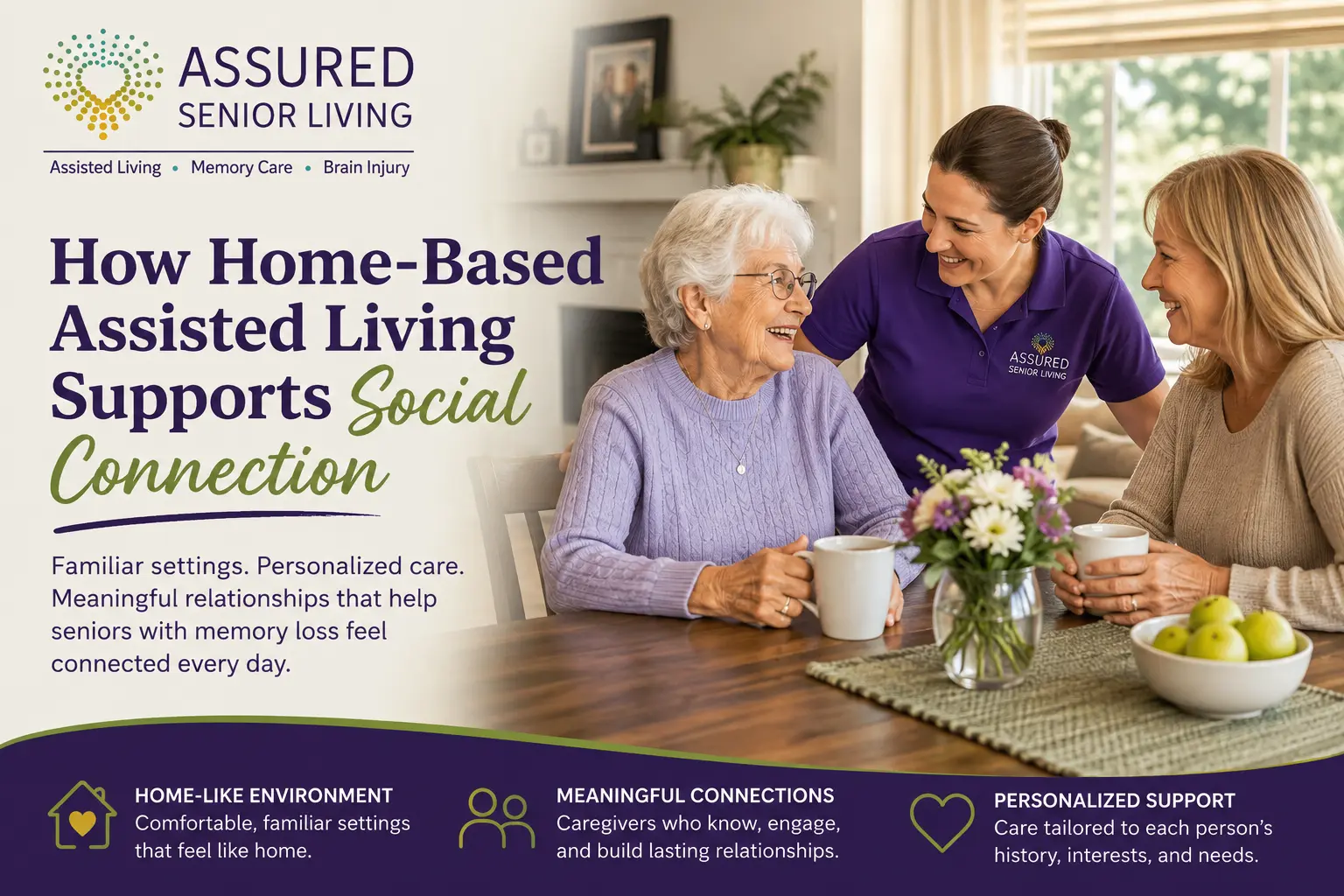
Instead of relying primarily on large activity programs or scheduled entertainment, small residential care settings can create opportunities for connection throughout everyday life—around the kitchen table, in the backyard, during meals, while folding laundry, listening to music, or simply talking with a familiar caregiver.
For adult children evaluating assisted living alternatives, understanding how the environment influences social connection can be an important part of choosing the right home.
What Is Home-Based Assisted Living?
Home-based assisted living typically provides personal care, supervision, meals, medication assistance, and other senior care services within a smaller residential environment.
Rather than resembling a large apartment building, resort, or institutional care setting, the residence may look and function much more like an ordinary home.
That difference is important.
The physical environment can influence how residents move through their day, how frequently they interact with caregivers, and how easily spontaneous conversations occur.
Smaller residential environments are also associated with a more familiar, everyday-home experience—an approach that can be particularly relevant for people experiencing dementia or other forms of memory loss.
The goal is not simply to create a smaller version of traditional assisted living.
It is to create a daily life centered on relationships, familiarity, routine, and individual support.
Why Social Connection Matters for Seniors With Memory Loss
Memory loss can change how someone interacts with the world.
A person who once enjoyed large family gatherings may become uncomfortable when several conversations happen at once. Someone who previously joined clubs or community organizations may no longer be able to drive or independently organize outings.
Even when a senior wants companionship, initiating social interaction can become difficult.
That is why seniors’ social engagement should not depend entirely on whether a resident remembers to attend an activity.
Caregivers may need to bring connection to the resident.
That might mean sitting together for coffee, inviting someone to help set the table, walking outside together, listening to a favorite song, or encouraging two residents with similar interests to spend time together.
The interaction does not need to be complicated.
Sometimes the smallest moments create the greatest sense of belonging.
Familiar Settings Can Make Interaction Easier
For someone experiencing dementia or cognitive change, an unfamiliar environment can require significant mental effort.
Long hallways, elevators, large dining rooms, multiple activity spaces, and dozens of unfamiliar faces may be easy for some residents to navigate but confusing for others.
A residential home can feel more recognizable.
There is a kitchen.
A dining table.
A living room.
A backyard.
Residents may see the same caregivers and neighbors repeatedly throughout the day.
That familiarity can create opportunities for conversation without requiring residents to navigate a complicated social environment.
Someone may walk into the kitchen and talk with a caregiver preparing lunch.
Another resident may sit nearby.
A conversation begins.
No one had to announce an activity.
No one had to remember a schedule.
Connection became part of daily life.
Small Residential Care Settings Can Encourage Natural Interaction
Large senior living communities can offer many benefits, including extensive amenities and large activity calendars.
But more choices do not automatically create meaningful engagement for every resident.
For a senior with memory loss, a room filled with 30 people may feel overwhelming rather than social.
In small residential care settings, the social environment may be easier to understand.
Residents repeatedly see the same small group of people.
Meals are family style and may be shared around one table.
Caregivers may spend more time in common household spaces.
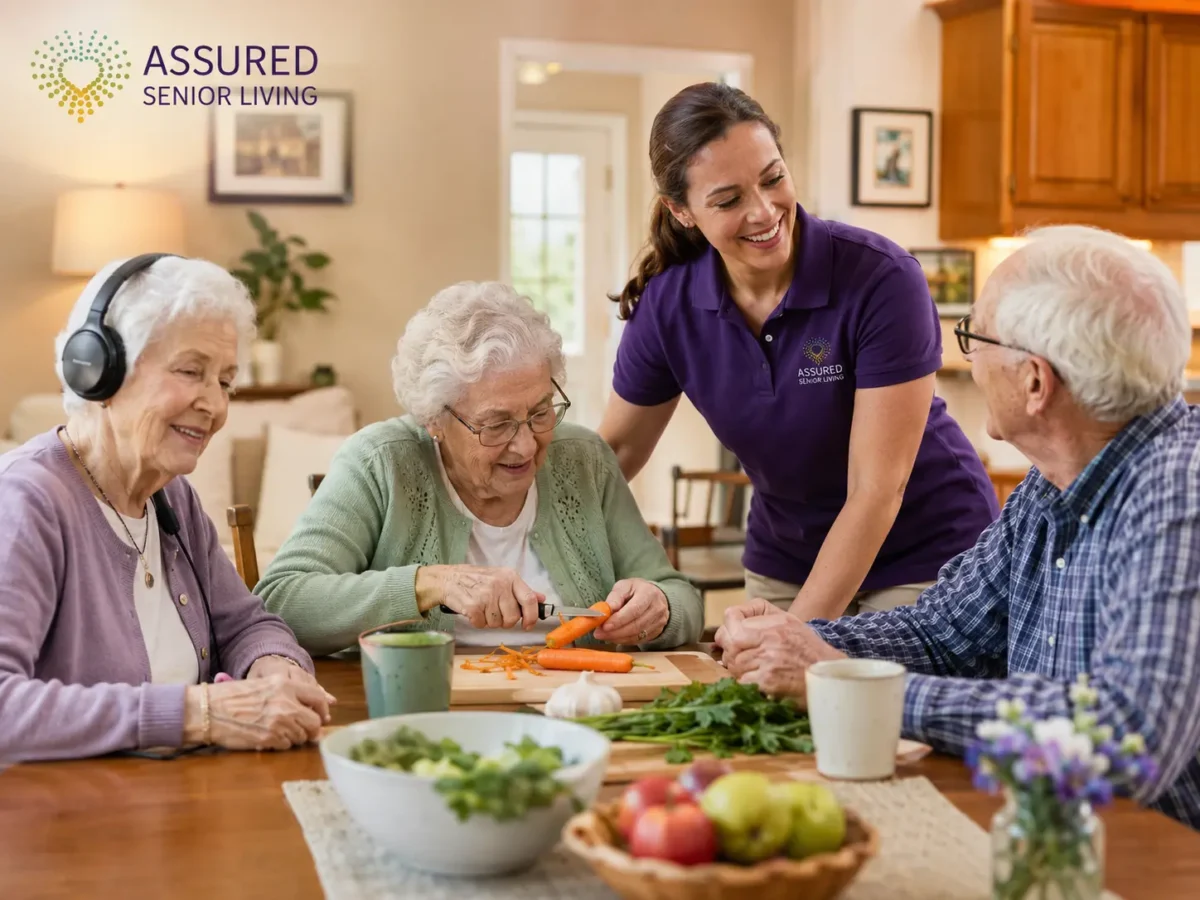
Activities can develop from what residents are already doing rather than requiring everyone to participate in the same program.
One resident might help peel vegetables while another listens to music.
Someone else might sit nearby and talk about grandchildren.
The result is less about keeping residents “busy” and more about helping them remain part of the life happening around them.
Personalized Support Helps Residents Participate
One of the most important advantages of personalized care is understanding how a particular person prefers to connect.
Not everyone enjoys group activities.
A resident who spent years gardening may respond better to watering flowers than attending a craft program.
A former teacher may enjoy reading with someone.
A longtime baseball fan may become animated when a caregiver turns on a game.
Someone who raised a large family may enjoy helping prepare dinner or fold towels.
Personalized customer service in other industries is built around understanding individual needs, preferences, expectations, and history rather than treating everyone the same.
The same principle becomes even more meaningful in senior care.
Effective engagement begins by asking:
Who is this person?
What did they enjoy before memory loss?
What kind of conversations make them smile?
Do they prefer quiet companionship or energetic interaction?
When are they most comfortable socially?
Personalized support turns those answers into everyday opportunities for connection.
Memory Care at Home Should Include Relationships, Not Just Tasks
Families researching memory care at home often focus initially on practical needs:
Can someone help Mom shower?
Who manages medications?
What happens if Dad becomes confused at night?
Those questions are essential.
But quality memory support should involve more than completing care tasks.
Caregivers may also become important social partners.
They may know how a resident likes their coffee.
They may recognize favorite songs.
They may understand that a resident becomes anxious before dinner or enjoys talking about a former career.
When caregivers consistently spend time with the same residents, everyday care can become relationship-based.
Getting dressed becomes a conversation.
Preparing breakfast becomes a shared activity.
A walk becomes companionship.
Care and social engagement begin happening at the same time.
Everyday Household Activities Can Create Purpose
Social connection does not always require organized entertainment.
Meaningful engagement might include:
- Helping prepare vegetables for dinner
- Watering flowers
- Folding towels with a caregiver
- Baking cookies
- Looking through family photographs
- Walking outside
- Listening to familiar music
- Setting the table
- Watching a favorite sports team
- Playing cards or working on a puzzle
- Talking about children or grandchildren
- Sitting outside with coffee
Assisted living can help older adults remain connected to hobbies, interests, relationships, and activities that give daily life meaning.
For someone living with dementia, success is not measured by finishing an activity but the joy and connection created.
The meaningful outcome may be participation.
A smile.
A conversation.
A laugh.
A few minutes of feeling useful.
Those moments matter.
Consistency Can Help Build Trust
Social engagement usually becomes easier when people feel safe with those around them.
That is particularly important for seniors experiencing memory loss.
A resident may not remember a caregiver’s name, but they may recognize the caregiver’s face, tone of voice, or emotional presence.
Repeated positive interactions can create familiarity.
When caregivers know residents well, they may also recognize subtle signals that someone wants company—or wants quiet time.
For example, a caregiver may realize that a normally talkative resident has become withdrawn.
Instead of waiting for that resident to ask for help, the caregiver can sit nearby, offer a familiar activity, or gently encourage interaction.
That kind of proactive relationship can be difficult to capture on an activity calendar, but it can have a significant impact on daily quality of life.
What Adult Children Should Look for During a Tour
When comparing home-based assisted living with other assisted living alternatives, look beyond bedrooms, décor, and amenities.
Pay attention to the relationships happening around you.
Are residents and caregivers talking naturally?
Do caregivers appear to know residents personally?
Are residents spending long periods alone?
Does the home feel calm but socially active?
Are residents participating in ordinary household life?
Can staff explain what individual residents enjoy?
Ask questions such as:
“How do you learn what my parent enjoys?”
“What happens if Mom does not want to participate in a scheduled activity?”
“How do caregivers encourage residents who tend to isolate themselves?”
“How many residents usually participate in meals or activities together?”
“Will the same caregivers regularly work with my parent?”
“How do you adapt activities as dementia progresses?”
The answers can reveal whether social engagement is truly personalized or programmed.
Social Connection Should Feel Like Life, Not a Schedule
Families sometimes assume the community with the longest activity calendar provides the best social experience.
That is not always true.
For some older adults—especially those experiencing memory loss—the most meaningful environment may be one where connection happens naturally throughout the day.
A conversation while breakfast is being prepared.
A familiar caregiver sitting nearby.
Two residents watching a baseball game.
Someone helping set the table.
A walk through the backyard.
A family member joining everyone for dinner.
That is one of the potential strengths of home-based assisted living.
Instead of separating “care,” “activities,” and “socialization” into different parts of the day, a small-home model can allow all three to happen together.
For adult children choosing senior care, the question therefore becomes more personal than:
“How many activities do you offer?”
A better question may be:
“Will my parent be known here?”
When caregivers understand someone’s history, preferences, routines, and personality, social engagement can become more meaningful than mere participation.
It can become belonging.
Find a Home Where Connection Comes Naturally
Choosing care for a parent is about more than finding a safe place to live. It is about finding a community where they can feel known, supported, and connected every day.
At Assured Senior Living, our home-based assisted living model is designed around familiar routines, personalized care, meaningful relationships, and the everyday moments that help residents feel like they belong.
If you are exploring care for a loved one experiencing memory loss, we invite you to experience the difference a small residential setting can make.
Schedule a tour of an Assured Senior Living home today and see what relationship-based care feels like in person.