
Home-Based Assisted Living in Denver for 2026: A Definitive Guide for Families
Choosing assisted living for a parent is rarely a simple decision. Families must balance safety, independence, medical needs, emotional well-being, location, cost, and the wishes of the person receiving care. In the Denver area, families also face an expanding range of options—from large senior living campuses to smaller residential homes.
For many older adults, home-based assisted living offers an appealing alternative. This model combines the comfort and familiarity of a residential home with the supervision, personal assistance, and professional support of an assisted living community. These homes truly feel and function like single-family homes. The staff loves and connects on a level that no other community can match.
The setting may be smaller, but the decision still requires careful evaluation. Not every residential home provides the same staffing, training, activities, communication, or level of personalized care, so families should compare these factors closely. As with any community, the company and operator really matter.
This guide will help adult children understand what to look for when comparing home-based assisted living communities in Denver in 2026.
What Is Home-Based Assisted Living?
Home-based assisted living is a form of residential assisted living provided in a smaller, home-like environment. Rather than living in a large building with long hallways, multiple dining venues, and dozens or hundreds of residents, an older adult lives in a residential home shared with a smaller group of people.
Residents typically receive assistance with needs such as:
- Bathing and personal hygiene
- Dressing and grooming
- Medication management
- Mobility and transfers
- Toileting and continence care
- Meal preparation and nutrition
- Therapy and life skills improvement
- Housekeeping and laundry
- Transportation coordination
- Social engagement and activities
- Safety monitoring and supervision
The goal is not simply to place an older adult in a smaller building. The best home-based assisted living communities use their size to create closer relationships, greater caregiver awareness, and a daily routine that feels personal.
In a quality residential setting, caregivers have opportunities to learn how each resident prefers to wake up, what foods they enjoy, how they communicate discomfort, which activities interest them, and what changes may indicate a health concern.
That knowledge can be difficult to build when caregivers are responsible for too many people at once.

Why Denver Families Are Considering Smaller Residential Options
Denver families have traditionally compared large independent living, assisted living, memory care, and skilled nursing communities. However, more decision-makers are now exploring smaller homes as they become more aware of how the environment and care model can affect everyday life.
A large community may offer a range of amenities, multiple activity areas, restaurants, salons, theaters, and spacious common areas. Those features may be valuable to an active resident who can independently access and enjoy them.
However, amenities do not automatically translate into meaningful daily support, so families should weigh support more heavily than appearance.
A parent who needs help getting out of bed, remembering meals, navigating the community, participating in activities, or communicating a need may benefit more from caregiver proximity than from the total number of amenities in the building.
Home-based assisted living can be particularly valuable for residents who:
- Prefer quieter and less overwhelming surroundings.
- Need frequent reminders or redirection.
- Benefit from predictable routines
- Require hands-on assistance throughout the day.
- Experience memory loss or cognitive changes
- Have difficulty navigating large buildings
- Value familiar caregivers and close relationships.
- Would benefit from a family-style daily environment
The right choice depends on the individual. Families should compare how each community’s structure will affect their loved one, and choose the option that best fits their needs—not simply how impressive the property looks during a tour.
Caregiver Attention Should Be a Top Priority
One of the most important factors in any Denver assisted living decision is caregiver availability.
Families are often told how many employees a company has. That number may include administrators, maintenance personnel, dining staff, marketers, activity professionals, nurses, receptionists, and employees working in other areas of the organization, so it should not be the main deciding factor.
The more useful question is:
How many direct caregivers will be available to help my parent during each shift?
Ask for the actual caregiver-to-resident ratio during:
- Mornings
- Afternoons
- Evenings
- Overnight hours
- Weekends
- Holidays
Care needs do not disappear at night or on weekends. Compare how the ratio changes after office personnel leave.
Families should also ask whether the stated ratio includes employees who are primarily completing administrative tasks. A nurse or manager may be inside the building, but that does not necessarily mean that person is consistently available to help residents dress, toilet, transfer, eat, or participate in daily routines, so ask who is truly available.
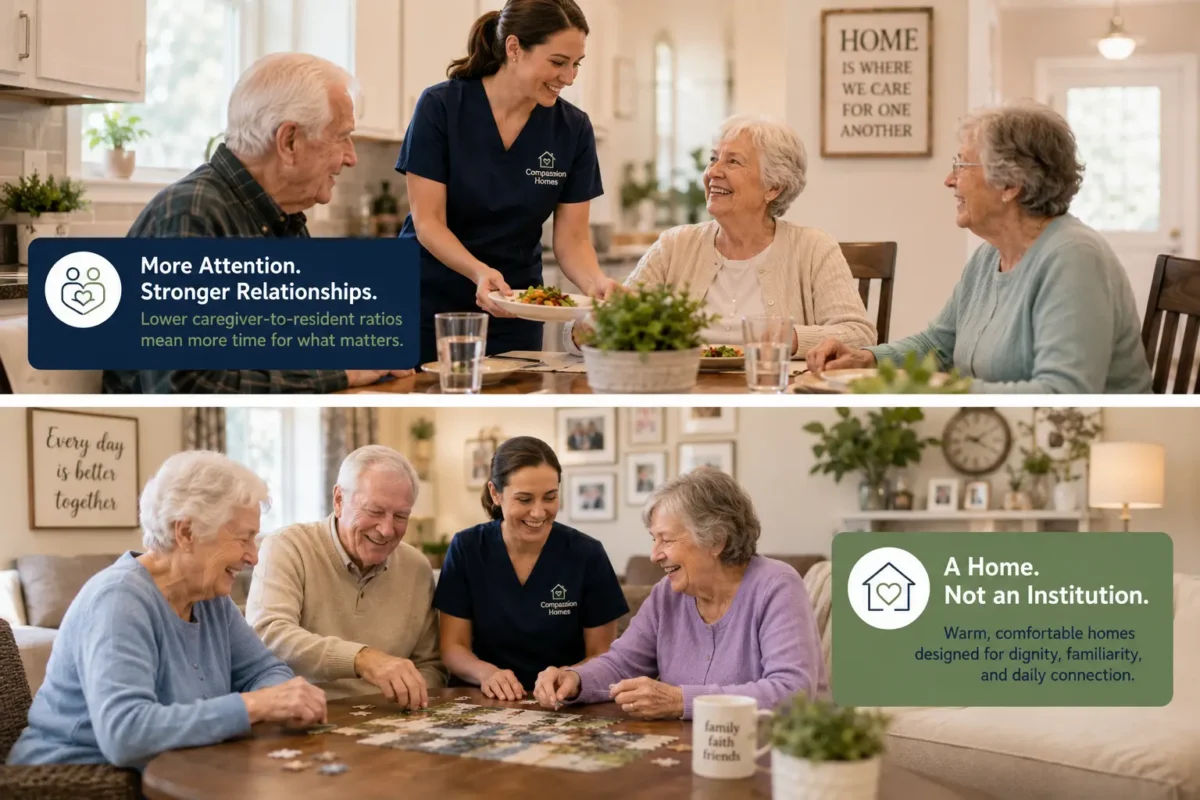
A lower caregiver-to-resident ratio can give caregivers more time to provide calm, attentive assistance instead of rushing from one task to the next.
Why Caregiver Consistency Matters
The number of caregivers matters, but consistency matters too.
When the same caregivers regularly support a resident, they begin to recognize subtle patterns. They may notice that a resident is eating less, walking differently, sleeping more, appearing confused, withdrawing from activities, or reacting differently to medication.
These changes may be harder to identify when residents frequently encounter unfamiliar staff.
Consistent caregivers can also learn personal preferences that may not appear in a formal care plan:
- How a resident likes their coffee
- Which side they prefer when transferring
- What is their favorite snack?
- Which approach works best when anxiety or sundowning sets in
- What music helps them relax
- Whether they like to shower in the morning or evening
- What topics encourage conversation
- Which foods they avoid
- What signs indicate pain, anxiety, or fatigue
For a resident living with dementia, familiarity can be especially important. Repeatedly encountering new faces may increase uncertainty or anxiety. Familiar caregivers can provide reassurance because they understand the resident’s routines, history, and communication style.
During your tour, ask:
- What is the current staff turnover rate?
- How do the staff connect with the residents?
- Does the community rely heavily on temporary agency staff?
- Will my parent regularly see the same caregivers?
- How are new caregivers trained before working independently?
- How does management support caregiver retention?
A beautiful home may make a strong first impression. Familiar, dependable caregivers are more likely to shape your parent’s long-term experience.
What Personalized Care Should Look Like
Many communities describe their services as personalized. Families should ask what that term means in practice and compare how each community delivers it.
Personalized care should extend beyond placing a resident’s name at the top of a standard care plan. It should influence how support is delivered throughout the day.
For example, a personalized approach may include:
- Respecting preferred waking and bedtime routines
- Supporting meal times that benefit each resident
- Serving familiar foods and accommodating dietary needs
- Supporting hobbies and lifelong interests
- Adapting communication to the resident’s abilities
- Offering choices instead of giving commands
- Incorporating family history into conversations and activities
- Adjusting assistance as physical or cognitive needs change
- Encouraging independence when an individual can safely complete a task
Residents should not be expected to adapt completely to the institution. The care environment should adapt, as reasonably as possible, to the resident.
Ask the community how it learns about a new resident. Does the team gather information about the person’s career, family, routines, interests, favorite foods, meaningful memories, and personal preferences, and use it to shape care?
The more caregivers know about a resident, the better prepared they are to provide support that preserves identity and dignity.

Evaluating Daily Activities and Engagement
A printed activity calendar can be useful, but it does not tell the whole story.
Families should determine whether residents actually participate in the listed activities and whether team members help those who need encouragement, transportation, cueing, or physical assistance, since participation matters more than the schedule alone. In home-based assisted living, the beauty is the personalized connection of the staff and resident. At Assured Senior Living, we encourage our staff to slow down and connect with the residents.
A calendar with several daily events provides little value if a resident remains alone because no one helps them join.
Meaningful engagement in home-based assisted living may include:
- Music and singing
- Gardening
- Baking and meal preparation
- Art and crafts
- Walking and gentle exercise
- Games and puzzles
- Reading and storytelling
- Pet visits
- Reminiscence activities
- Household routines
- Outdoor time
- Family-style meals
- Small-group conversations
- Virtual Reality – take a trip without leaving the home
- Holiday and cultural traditions
Activities do not always need to be elaborate. Helping prepare a salad, folding towels, watering plants, setting the table, or listening to favorite music can create a sense of purpose and connection.
Ask how activities are adapted for residents with different physical and cognitive abilities. The strongest programs do not simply announce an activity and wait for residents to arrive. Caregivers understand residents’ interests and actively invite them to participate in meaningful experiences.
The Importance of Meals and the Dining Environment
Meals are about more than nutrition. They create routine, social connection, comfort, and opportunities for caregivers to observe changes in appetite or ability.
In smaller residential communities, meals may be served around a shared kitchen or dining table. This can create a familiar experience that feels less institutional.
When comparing senior care services, ask: Are meals prepared in the home? Can menus accommodate preferences and dietary restrictions? Are snacks and drinks available throughout the day? Do caregivers sit with residents during meals?
- Can menus accommodate preferences and dietary restrictions?
- Are snacks and drinks available throughout the day?
- Do caregivers sit with residents during meals?
- How does the team support residents who need cueing or feeding assistance?
- How are weight loss and changes in appetite monitored?
- Can family recipes or favorite foods be incorporated?
Observe a meal when possible. Look at whether caregivers are present, whether residents appear comfortable, and whether anyone who needs help receives it patiently.
Can the Community Support Changing Needs?
Your parent’s current needs are only one part of the decision. Families should also consider what may happen over the next several years.
Ask what conditions or care needs could require a resident to move. Communities may differ in their ability to support advanced dementia, incontinence, mobility limitations, two-person transfers, behavioral changes, hospice services, or complex medication routines.
Questions to ask include:
- How often are care plans reviewed?
- How often are doctor visits?
- What happens when a resident requires more assistance?
- Is technology used to improve communication?
- How are families informed about changes?
- Can outside therapy, home health, or hospice providers visit?
- What conditions might require discharge?
- How does pricing change as care needs increase?
- Is overnight supervision sufficient for residents with higher needs?
A transparent provider should explain both what it can support and where its limitations begin.
Key Questions to Ask During a Denver Assisted Living Tour
Bring a written list so important questions are not forgotten.
- What is the direct caregiver-to-resident ratio on every shift?
- How long have the current caregivers worked in the home?
- Does the community use temporary or agency caregivers?
- Who is responsible for medication management?
- How are emergencies and changes in condition handled?
- How are families updated about their loved one?
- What activities do residents genuinely participate in?
- How are meals prepared and personalized?
- What training do caregivers receive?
- How are residents supported overnight?
- Can the home accommodate changing physical or cognitive needs?
- What services are included in the monthly price?
- What additional charges should families anticipate?
- Under what circumstances would a resident need to move?
- Can the family speak with current residents or family members?
Listen not only to the answers but also to how they are provided. Clear, direct responses may indicate transparency. Vague answers, repeated redirection, or an unwillingness to discuss staffing should prompt further investigation.
Look Beyond the Tour
Tours are designed to present a community at its best. Families should slow down and observe everyday interactions.
Notice whether caregivers greet residents by name. Watch whether they kneel or sit when speaking with someone rather than talking over them. Pay attention to whether residents appear comfortable approaching staff.
Use your senses. Does the home feel calm? Is it clean without appearing sterile? Can you smell food cooking? Are residents engaged, resting comfortably, or appearing unattended?
Ask whether you can visit at a different time of day. An evening or weekend visit may offer a more realistic picture of staffing and routines than a scheduled weekday tour.
Choosing the Right Home-Based Assisted Living Community
The right home-based assisted living option should provide more than a bedroom and a list of services. It should offer safety, dignity, connection, and a daily life that still feels personal. It truly needs to create an incredible sense of purpose for all the residents.
As you compare residential assisted living options throughout Denver, focus on the factors that will affect your loved one every day:
- Caregiver availability
- Staff consistency
- Relationship quality
- Meaningful engagement
- Comfortable surroundings
- Family communication
- Personalized routines
- The ability to respond as needs change
Beautiful finishes may influence the first impression. Relationships will often have the greatest impact on your parent’s quality of life.
Choose the place where caregivers have enough time to notice, listen, respond, and truly know the person receiving care.
Discover the Assured Senior Living Difference
Your parent should never feel like a room number, a task on a checklist, or one more call button waiting to be answered.
At Assured Senior Living, we believe care should be personal, proactive, and built around genuine human relationships. Our residential assisted living model is designed to create the comfort of home while surrounding residents with attentive support, meaningful routines, home-cooked meals, familiar caregivers, and a community where each individual can be truly known.
You do not have to make this decision based on a brochure, a scripted sales presentation, or a building’s appearance.
Come see what personalized care looks like in everyday life.
Meet the caregivers. Walk through one of our homes. Sit at the kitchen table. Ask us the difficult questions about staffing, caregiver consistency, activities, communication, and changing care needs. We welcome those questions because your family deserves clear answers before making one of the most important decisions of your lives.
Do not wait for a fall, hospitalization, medication error, wandering incident, or caregiver crisis to force your family into a rushed decision. Start the conversation now, while you still have time to compare options thoughtfully and choose the right home.
Contact Assured Senior Living today to schedule a private tour and personal care consultation. Let us learn about your loved one, answer your questions, and help you determine whether our small-home approach is the right fit for your family.
Your parent deserves more than a place to receive care.
They deserve a home where they are recognized, respected, supported, and loved.
Assured Senior Living—Love, it’s what we do.