
7 Things to Know About Home-Based Assisted Living
Choosing assisted living for a parent can feel overwhelming, especially when every community uses phrases such as “personalized care,” “comfortable living,” and “supportive services.” For Denver families, one important distinction is the difference between home-based assisted living and a larger senior living community.
Home-based assisted living is usually provided in a smaller residential setting designed to feel more like a familiar home than an institution. Residents receive help with daily routines, meals, medications, personal care, supervision, and meaningful activities.
Here are seven things adult children should know when comparing residential assisted living options in Denver.
1. It Combines Residential Comfort With Professional Support
Home-based assisted living is not the same as in-home care. In-home care generally means that a caregiver visits an older adult’s private residence at scheduled times. Home-based assisted living usually refers to a licensed residential care setting located in a house-like environment. Residents live there and receive ongoing senior care services from trained caregivers.
This model may be appropriate when an older adult is no longer safe living alone but does not need skilled nursing. Support can include bathing, dressing, grooming, eating, toileting, mobility, medications, housekeeping, laundry, and meals.
These tasks are often called activities of daily living, or ADLs. They include basic functions such as eating, using the bathroom, and moving safely from place to place.
The goal is to provide the right level of support while protecting dignity, independence, and choice.
2. Smaller Settings Can Make Personalized Care More Practical
Large senior living communities may serve dozens or hundreds of residents. They can offer attractive amenities, but those features do not automatically create individualized care.
Because fewer people live in small residential facilities, caregivers may have more opportunities to learn each resident’s routines, preferences, personality, and communication style. Smaller assisted living environments are often associated with familiar relationships, quieter surroundings, and easier social connection.
Personalization appears in ordinary moments: knowing how a resident likes coffee, noticing unusual quiet, remembering a bedtime routine, or choosing music that reduces anxiety.
A care plan matters, but caregivers must know the person behind it. During a tour, ask how many residents and caregivers are present and whether the same staff regularly return.
3. Daily Life Often Follows a Natural Household Rhythm
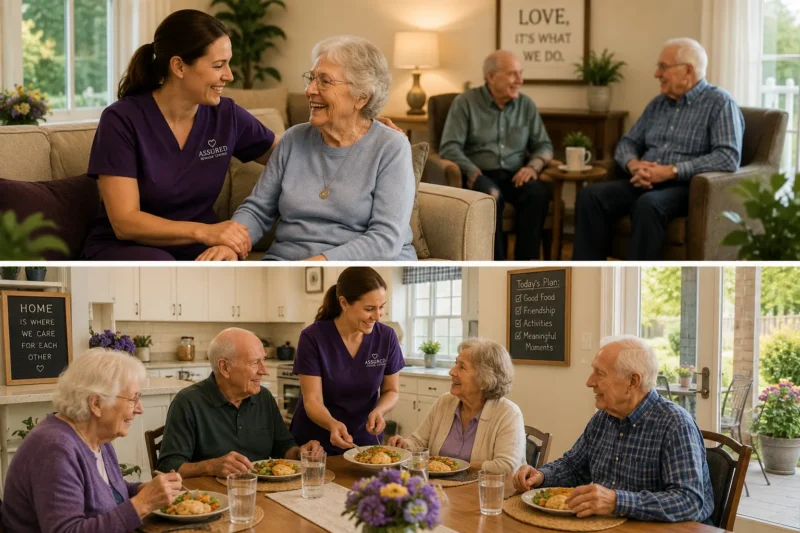
Daily life in home-based assisted living may feel less institutional. Instead of moving through long hallways to reach dining or activity spaces, residents may gather around a kitchen table, relax in a living room, spend time in a backyard, or participate in activities within the home.
A typical day might include a calm morning routine just for that resident (remember we are smaller and more personalized), a home-cooked breakfast, help with personal care and medications, light exercise, music or games, family-style meals, rest periods, and a relaxed evening.
The smaller environment can make it easier to adjust the day around the resident. Someone who sleeps later may not have to wake for a fixed breakfast time, while a resident who tires in the afternoon may rest without missing an entire program.
Families exploring elderly care in Denver should look beyond the activity calendar. Ask what residents did yesterday and whether they appear comfortable and known by staff.
4. Caregiver Access Matters More Than Building Size
Families are often impressed by restaurants, theaters, salons, and resort-style amenities. Those features can add comfort, but they do not answer the most important care question: How available are caregivers when a resident needs help?
A large community may employ many people overall, yet relatively few direct-care staff may cover a large group during a particular shift. Total staffing numbers can be misleading.
Ask specific questions:
- How many residents is each caregiver responsible for?
- Does that number change overnight?
- How long have the caregivers worked there?
- Are temporary workers frequently used?
- Who communicates with families when needs change?
Home-based assisted living may allow caregivers to remain physically closer to residents. In a smaller home, staff can often see, hear, and respond to changes more quickly. This proximity can support proactive care, especially for residents with memory loss, fall risk, mobility challenges, or difficulty using a call button.
5. Meals and Activities Can Be More Flexible and Familiar
Food is a major part of quality of life. In a small residential setting, meals are often prepared in the home and served in a family-style dining area. Residents may smell breakfast cooking, see caregivers preparing lunch, or participate in simple household routines.
This familiar setting may help older adults who feel overwhelmed by large dining rooms or noise.
Ask how the home handles dietary restrictions, food allergies, diabetes-friendly meals, texture-modified diets, favorite foods, appetite changes, and mealtime assistance.
Activities should reflect resident interests. Meaningful engagement can include watering plants, baking, listening to music, walking outside, viewing photographs, or helping set the table.
The best residential assisted living programs understand that purpose does not always come from a formal event. It often comes from being included in the home’s natural life.
6. Small Residential Facilities Are Not Right for Everyone
Home-based assisted living offers many advantages, but it is not automatically the best choice for every older adult.
Some seniors enjoy large communities with social groups, classes, transportation, and frequent entertainment. A highly independent person who wants a busy campus lifestyle may prefer that environment.
Smaller homes and environments offer a level of personalized care and love that is hard to replicate. A smaller home may be a better fit for someone who becomes anxious in crowded settings, benefits from familiar caregivers, needs frequent reminders or supervision, prefers quieter interaction, has mobility limitations, or values predictable routines. Smaller homes empower staff to create a more independent environment with personalized care.
Families should also confirm whether the home can support future needs. Ask about memory care, mobility assistance, diabetic care, hospice coordination, behavioral support, and aging in place. Understanding capabilities and limitations can prevent a difficult move later. It is important to truly understand what or why a discharge is required.
When evaluating home-based assisted living in Denver, compare the resident’s personality and care needs with the actual environment rather than choosing based on appearance alone. Denver-focused guidance commonly recommends comparing caregiver attention, daily activities, personalized care, and cost.
7. Relationships, Consistency, and Communication Matter Most
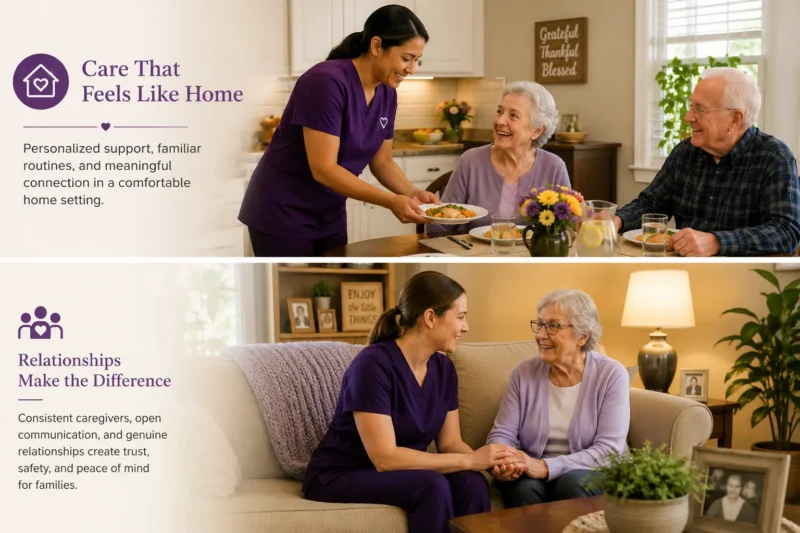
Strong residential care is built on trust. Caregivers should know the resident, notice changes, communicate concerns, and provide patient, respectful support.
During a tour, observe what is happening around you. Do caregivers greet residents by name? Do they speak directly to them? Are residents waiting for help? Does the home feel calm and clean? Do staff members appear rushed?
Ask who calls when there is a change in condition, how often care plans are reviewed, and how concerns are resolved.
Staff consistency is especially important for older adults living with dementia. Familiar caregivers may recognize subtle signs of pain, infection, dehydration, anxiety, or confusion before those changes become larger problems. In a smaller setting, relationships can become part of the care itself.
Choosing the Right Home-Based Assisted Living Community in Denver
The right setting should offer more than a room and a checklist of services. It should provide safety, dignity, connection, and a life that feels personal.
As you compare home-based assisted living communities, focus on what your parent or loved one will experience every day: caregiver availability, staff consistency, meals, routines, meaningful engagement, communication, and the ability to adjust care as needs change.
Beautiful buildings make a strong first impression. Relationships determine life after the tour.
At Assured Senior Living, our small-home model is designed around personalized attention, familiar routines, and meaningful relationships. We believe care should be proactive, not reactive, and that every resident deserves to be known as a person, not a room number. Love, it’s what we do.
Schedule a conversation or tour to see how home-based assisted living can provide your loved one with the comfort of home and the support your family needs.